Slowest speed, shortest sessions
A slow drum removes less per second, which is exactly what you want when you cannot see the quick. Two nails a day is a perfectly good pace for a nervous dog.
Check the surface constantly
Stop, look, continue. That rhythm is the entire advantage of a grinder over clippers, and rushing throws it away.
Watch the heat
Grinding warms the nail. If you are holding the drum on one claw long enough to feel warmth, you are going too fast — and heat is what teaches an animal to refuse the tool.
Overgrown claws are a vet job first
When a claw curves, the quick has grown out with it. Someone has to shorten it in stages, and the first stage is not a home job.
This page is about equipment, not health. If an animal’s appetite, weight, drinking or toileting has changed, that belongs with a vet who can examine it — no appliance, and no page on this site, can tell you what a change means.
The questions owners ask
How do I know when to stop on a dark claw?
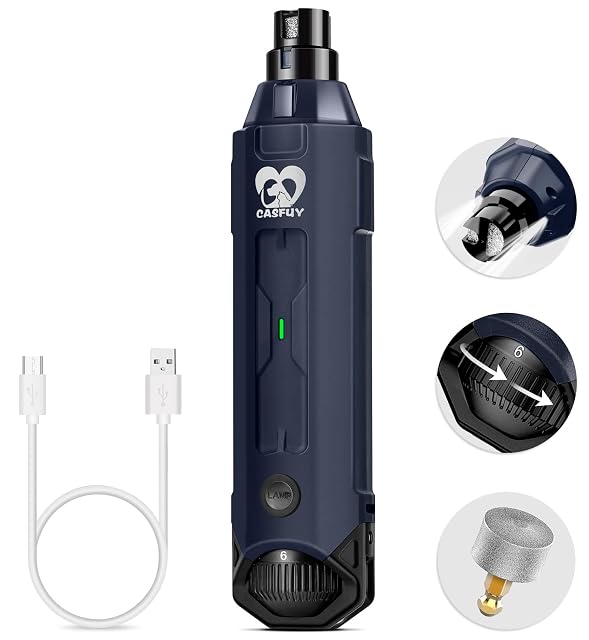
Look at the cut surface as you go: it changes appearance as you approach the quick, and a grinder lets you check every few seconds in a way clippers do not. Two LEDs lighting the nail from the side make the boundary visible on many dark claws.
What if a nail bleeds?
Firm pressure and a styptic product, and stop for the day. If it happens more than once, or a claw is overgrown enough to curve, have a vet or groomer make the first cut and copy what they leave.
Last reviewed 2026-08-17