Skip to content

The best microchip cat and dog doors for 2026

A microchip door reads the chip your animal already carries and opens for that number alone, which ends the two problems every flap has: the neighbor’s cat coming in, and your own animal not getting back. The compatibility question is narrow and decisive — most doors read 15-digit FDX-B chips, only some also read the older 9 and 10-digit types, and a chip the door cannot read makes the purchase useless. We compare supported standards, battery life, tunnel depth for thick walls, and the locking modes.

The models we recommend

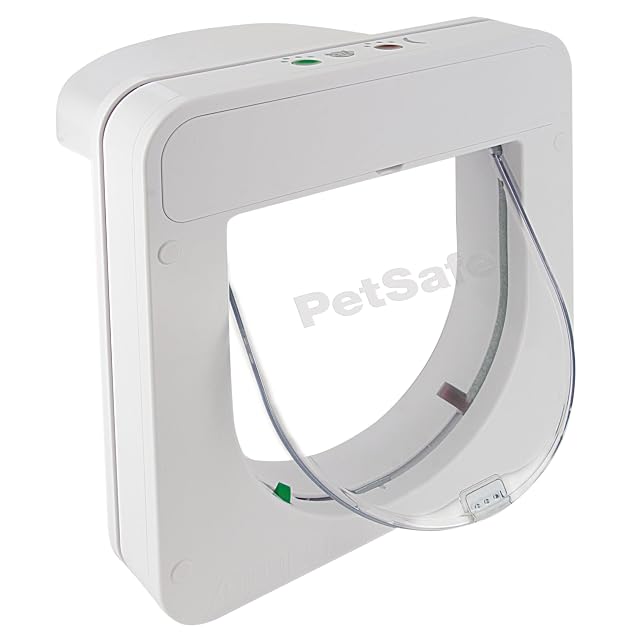
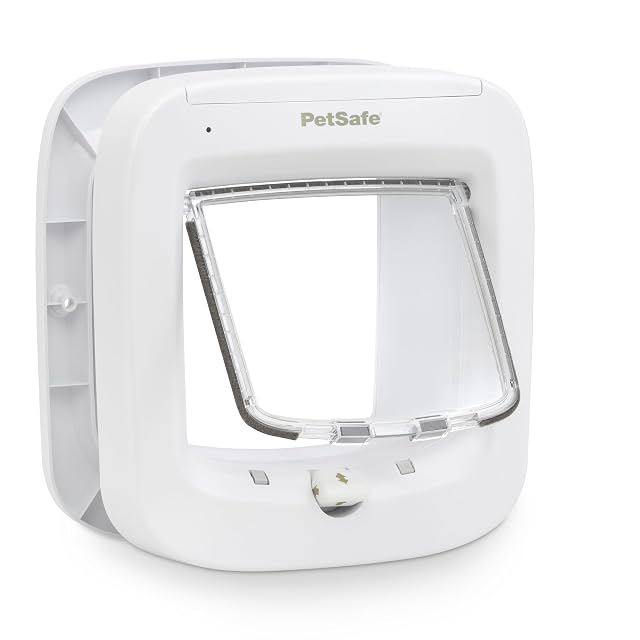
  1. PetSafe Microchip Cat Flap

    15-digit chips · up to 40 pets · 4 manual modes · weather seals

    The cheapest microchip flap here apart from the Cat Mate, reading 15-digit chips for up to 40 animals, with four manual locking modes and double magnetic closing points.

    Best for: A first microchip flap on a budget, where the cat’s chip is a modern 15-digit one.

    7.0/10

    ≈ $110

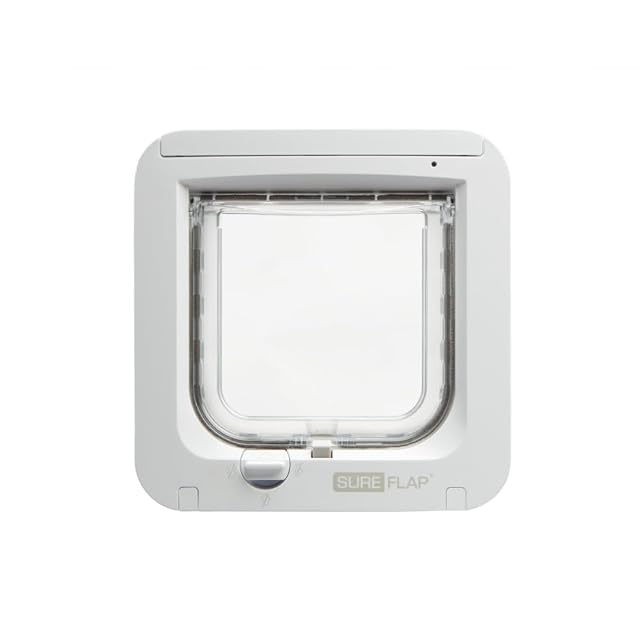
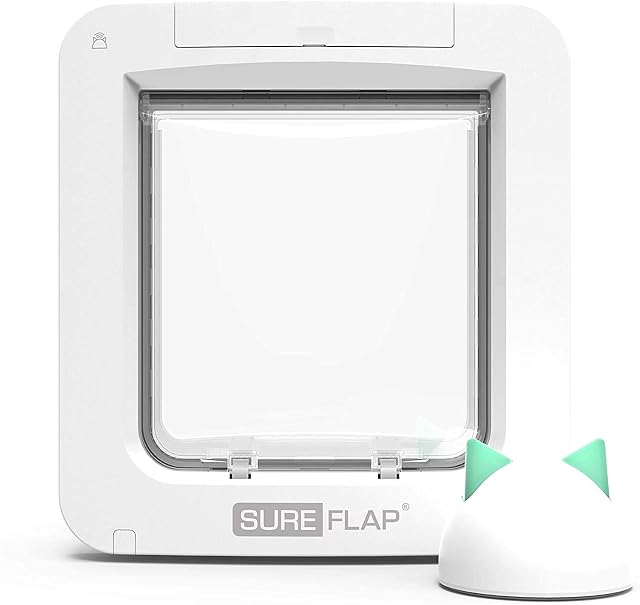
  2. SureFlap Microchip Cat Flap

    Microchip · 4 × AA · up to 12 months of battery · 4 locking modes

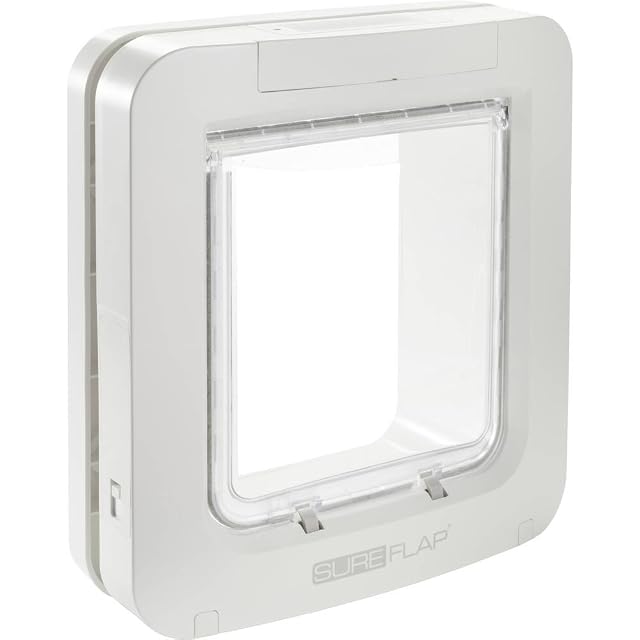
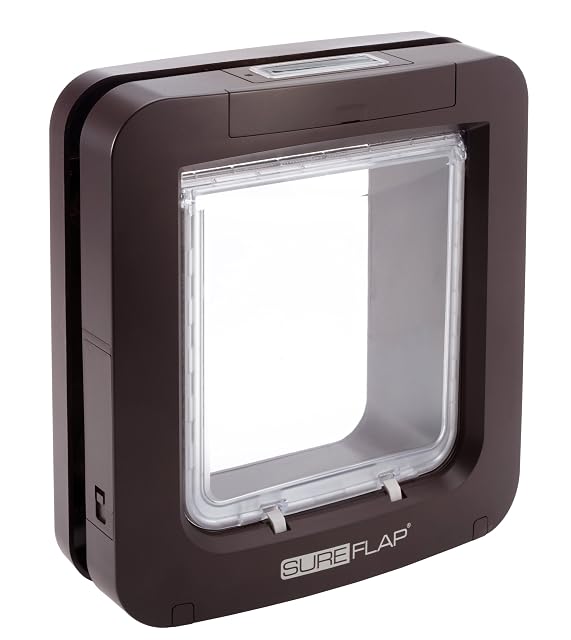
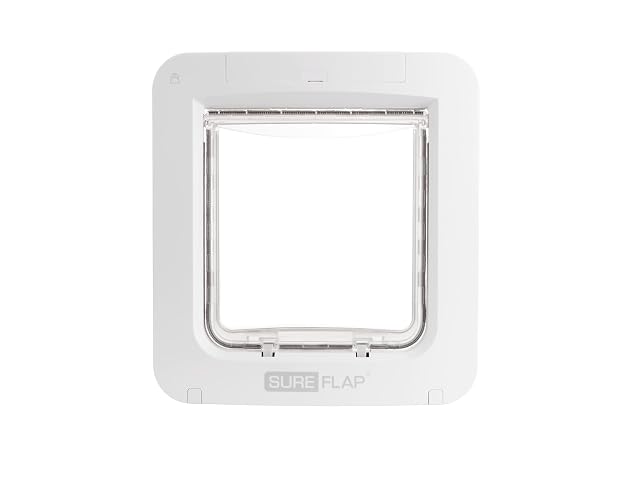
    The plain SureFlap: it reads your cat’s chip, keeps the neighbor’s cat out, runs a year on four AA cells, and has no app at all. It is the one most households actually need.

    Best for: One or two cats, a wooden door, and no interest in an app — which describes most homes.

    8.2/10

    ≈ $135

  3. PetSafe Petporte Smart Flap

    Microchip · up to 25 cats · night mode · wood, glass, PVC, metal

    A microchip flap with an optional night mode that keeps the cat in after dark, and a fitting kit that covers wood, glass, PVC and metal doors.

    Best for: Anyone who wants a curfew without a hub — this is the cheapest way to get one.

    7.6/10

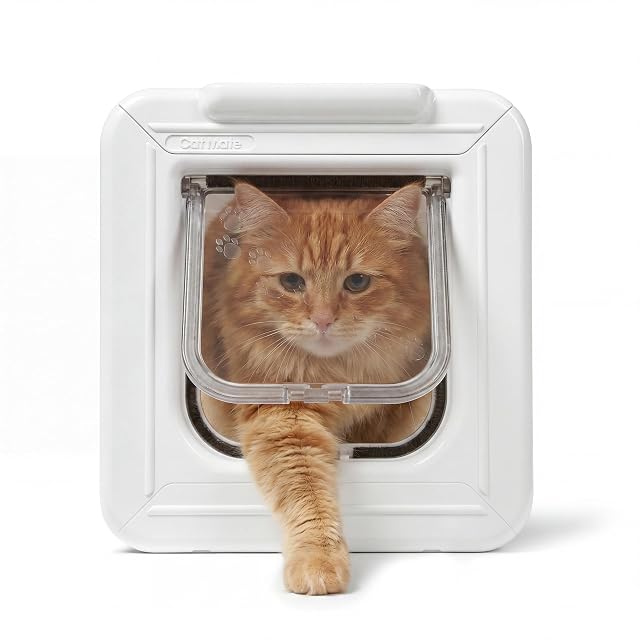
  4. Cat Mate Elite 355W

    Microchip · entry only · 4-way timer · cut-out 7 1/16 × 8 1/16 in

    A microchip cat door with programmable timer locking, reading the cat’s existing chip and letting any cat out.

    Best for: A single-cat or multi-cat house where the only problem is the neighbor’s cat

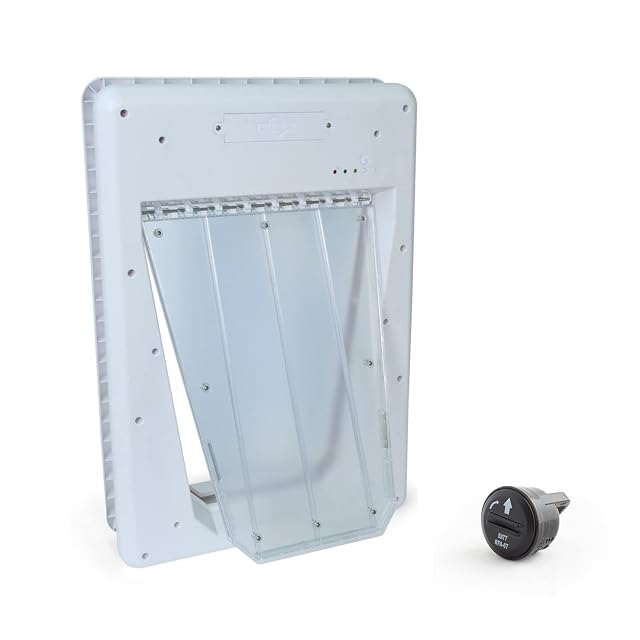
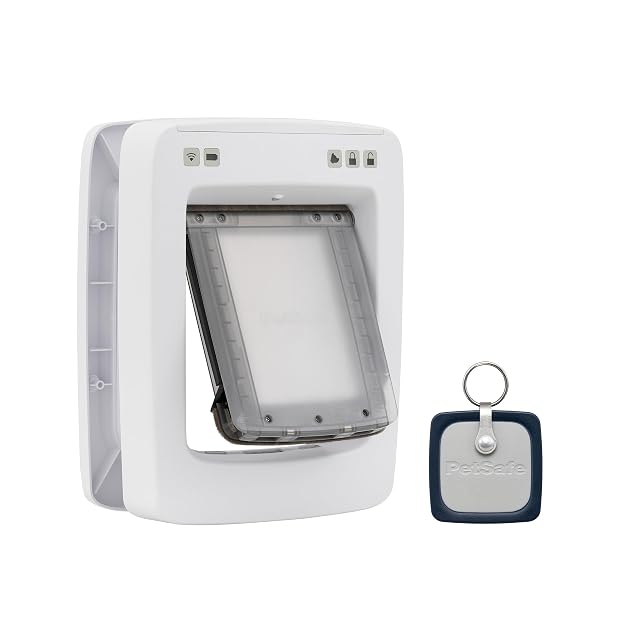
  5. PetSafe PPA11-10709 Large

    Collar key, not microchip · up to 5 keys · dogs to 100 lb · 4 × D cells

    A large electronic pet door that opens for a battery-powered collar key rather than a microchip, for dogs up to 100 pounds.

    Best for: A large dog, where no microchip door on this shelf is big enough

  6. SureFlap DualScan

    Dual scan · exit permissions per cat · 32 cats · 4 × AA, 12 months

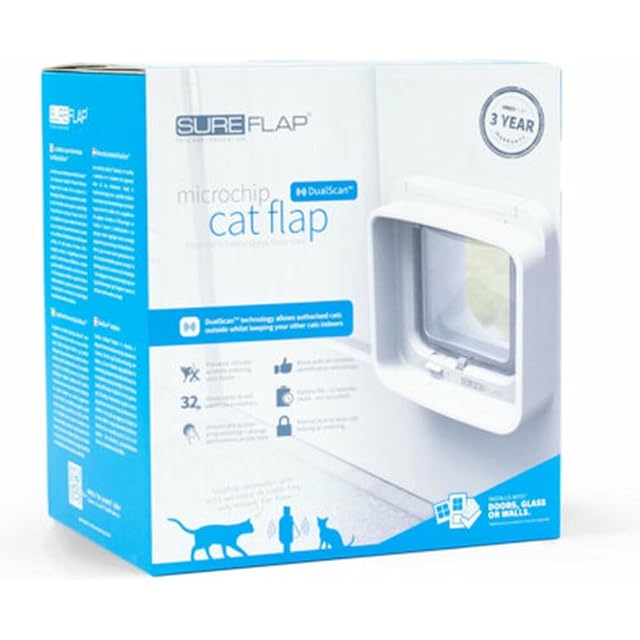
    A microchip cat door that scans in both directions, setting exit permission for each of up to 32 cats individually.

    Best for: A multi-cat house where one cat must stay in and another must not

  7. SureFlap Microchip Pet Door Connect

    Microchip or RFID tag · app · timed curfew · 178 × 170 mm (7.01 × 6.69 in) opening

    The large Connect flap: app control, a programmable curfew, and an opening of 178 × 170 mm (7.01 × 6.69 in) for big cats and small dogs.

    Best for: A household that wants the cat in before dark without standing at the door — and a cat too big for a standard flap.

    8.8/10

    ≈ $260

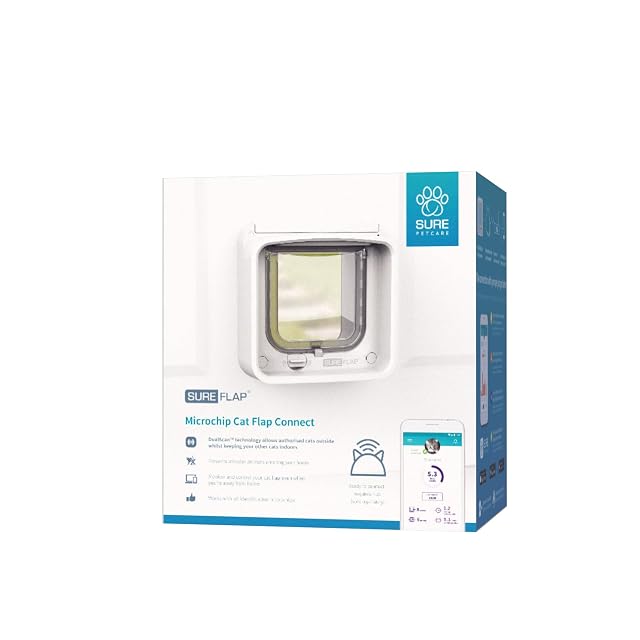
  8. SureFlap Microchip Cat Flap Connect

    Microchip or RFID tag · app monitoring · in-and-out logging

    The standard-sized Connect flap: the same chip reading as the plain model, with the app that logs when your cat came and went.

    Best for: Anyone who wants to know whether the cat is in or out from work — or to notice, in the log, that it has stopped going out.

    8.2/10

  9. SureFlap Pet Door Connect

    Large opening · microchip or RFID · app · timed curfew

    The largest flap SureFlap makes with an app: chip reading, curfew, and an opening sized for big cats and small dogs. It is also the largest hole you will cut in a door here.

    Best for: A small dog, or a household with both cats and a dog using the same door.

    7.8/10

Finding your need in microchip pet doors

A flap that handles several animals

The number of chips it can store decides how many animals are allowed through. That is the structural limit of these devices.

SureFlap Microchip Pet Door Connect

Keeping intruders out

Chip-triggered opening is what sets these flaps apart from a free-swinging hatch. It is their single, sufficient reason to exist.

PetSafe Microchip Cat Flap

Fitting the thickness of the door

A cat flap goes into a panel whose thickness runs from three to fifty millimeters depending on the door. The stated thickness range, and whether an extension tunnel exists, decide feasibility.

SureFlap Microchip Pet Door Connect

The buyer behind each kind, in microchip pet doors

Neighborhood cats
That is the problem this format solves: a strange cat does not open the door. Recognition is what you are buying.
Controlled outings
Exit-only or entry-only mode keeps a cat indoors at night without shutting it in completely.
Unchipped animal
A collar tag can replace the chip on many models. It gets lost, unlike the chip.

The downsides that come with microchip pet doors

Security against acceptance
The noise of the lock makes some cats hesitate. Habituation often means leaving the door unlocked at first.
Batteries against mains
Most of these flaps run on batteries, which go flat. An out-of-service flap leaves the animal outside or inside.
Chip recognition against tag
The chip never gets lost; the tag suits unchipped animals and can come off. Not every chip type is read by every model.

The questions people ask about microchip pet doors

Are all chips recognized?

No, standards vary and some models do not read every type. Check compatibility with your animal's chip before buying.

What happens when the batteries die?

Depending on the model, the flap locks or unlocks. That behavior is worth knowing — it changes everything while you are away.

How do I get the cat used to it?

By leaving the door open or unlocked at first, then enabling it gradually. The noise of the lock is the main obstacle.

Can it be fitted in glass?

With an adapter and a cut-out made by a glazier. Not an operation to improvise on double glazing.

Is entry-only mode useful?

It keeps the cat indoors at night while still letting it come home. A very common use.

Does the flap stand up to wind?

The lock stops it opening and the flap itself can bang. Double-flap models limit drafts.

How many animals can be stored?

It varies by model, from a few to several dozen. That is the limit to check in a multi-animal household.

Is it easier to cut a wooden or a PVC door?

Wood saws cleanly with a template; PVC over a hollow core needs reinforcement round the opening. The door type decides the fitting time more than the flap does.

Worth remembering, on microchip pet doors

Check that the model really reads your animal's chip type: not every standard is recognized. Know too what the flap does when the batteries die — locked or unlocked, that changes everything while you are away.

Microchip pet doors in brief

  • Flap opening: 4 to 611, on 3 of the 12 models.

Microchip pet doors, side by side

There is no table here, and the reason is in the listings. The figure published most often across these 12 products is key, given by 7 of them — short of the four in five a column needs to compare rather than to display gaps. Each product page says what its own maker published.

The guides that discuss microchip pet doors

Sources, and how we decide

Specifications: manufacturer sheets for pet devices and the matching Amazon product pages. Prices and availability: Keepa.

Most recent revision in this category: October 6, 2026.

The way we judge microchip pet doors