Skip to content

The best pet dryers and blasters for 2026

A pet dryer moves water off a coat with air rather than with heat, which is the entire argument for owning one: a force dryer at high airflow and low temperature dries faster than a hot household hairdryer and puts far less heat near skin. We compare airflow, whether the heat is adjustable or fixed, hose length, and noise — the single factor that decides whether a dog tolerates the machine at all.

The models we recommend

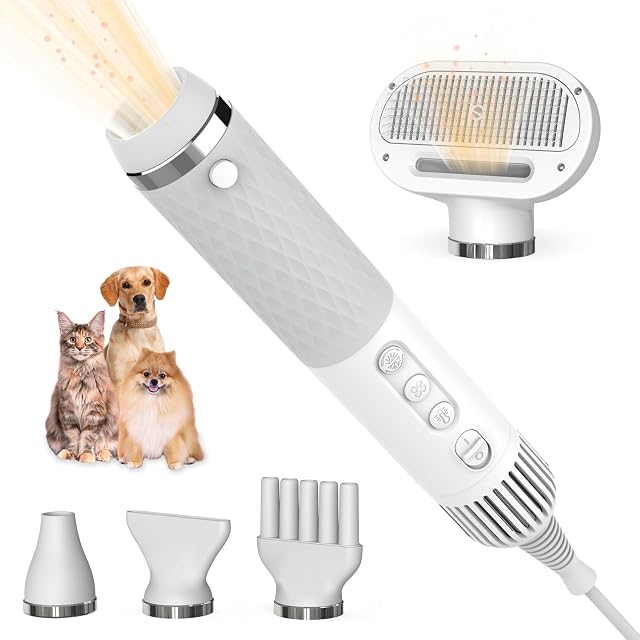
  1. KUUBIA 5-in-1,900 W

    900 W · four nozzles · 4 heat steps 30–80 °C (86 to 176 °F) · ionic

    A 900-watt dryer with four nozzles, three wind speeds and four heat settings from 30 to 80 °C (86 to 176 °F), plus an automatic temperature cycle. It doubles as a brush.

    Best for: A small or medium dog, or a cat that tolerates air, where knowing the actual temperature matters more than raw power.
    7.8/10

  2. Hoyiyobi 3200 W blower

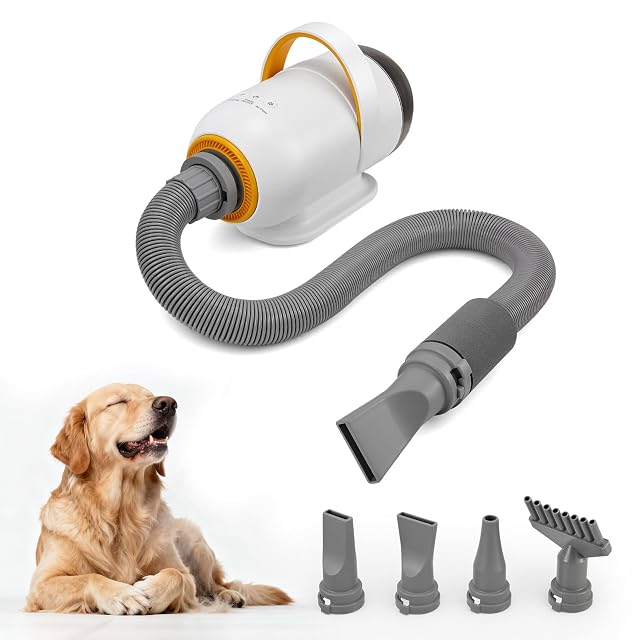
    3,200 W · 7 heat settings · four nozzles · with suction

    A 3,200-watt blaster with seven temperature settings, four interchangeable nozzles and a suction function. It is the machine for a large, wet, double-coated dog.

    Best for: A large, thick-coated dog after a bath — the case where a household hairdryer takes an hour and this takes fifteen minutes.

    7.8/10

Finding your need in pet dryers

Drying a dense coat

Airflow decides the drying time. On a thick coat a weak machine never reaches the undercoat.

Hoyiyobi 3200 W blower

Staying below the level that frightens

An eighty-decibel blaster sends a dog running at the first session, and it does not come back. The stated noise level decides feasibility, before power.

KUUBIA 5-in-1,900 W

The buyer behind each kind, in pet dryers

Long or double coat
Drying right through to the undercoat is what avoids residual damp. That is where the dedicated machine earns its place.
Animal sensitive to noise
These machines are loud by nature. An adjustable-speed model and gradual habituation are essential.
Occasional drying
An absorbent towel does most of the work on a short coat. The machine earns its place when baths are frequent.

The downsides that come with pet dryers

A fast blower dries quickly and frightens the animal
Airflow is what dries, and it is also what makes the noise. Acceptance by the animal often caps the usable power.
Hot air against ambient air
Many pet dryers dry through airflow rather than heat, precisely to avoid any risk of burning.
Dedicated machine against hairdryer
A human hairdryer runs too hot and dries the undercoat badly. Dedicated machines favor air volume.

The questions people ask about pet dryers

Can I use a human hairdryer?

It runs too hot for an animal's skin and dries the undercoat badly. Dedicated machines favor airflow over heat.

How far from the coat should you blow?

Never too close, keeping the machine moving, and never directing air at the eyes, ears or muzzle.

How do I get the animal used to it?

Short sessions, machine running at a distance first, paired with something pleasant. Noise is the main obstacle.

Does the coat need drying completely?

A dense coat left damp at the undercoat can cause trouble. That is exactly what the machine avoids.

Is hot air necessary?

Not necessarily: many machines dry through air volume. Heat raises the risk of burning sensitive skin.

Should the ears be protected?

Never direct the flow straight into the ears. Many groomers protect the ears during drying.

How do you clean a pet blower?

The filters load with hair very quickly and must be cleaned regularly. A blocked filter makes the machine overheat.

Does a blaster replace the towel?

No: towelling first takes out half the water in a minute and halves the blow time. Blasting a soaking coat throws water everywhere for nothing.

Worth remembering, on pet dryers

Airflow is what dries, not heat — and heat is precisely what risks burning. Never direct the flow at the eyes, ears or muzzle, habituate in short sessions, and clean the filters, which load up very fast.