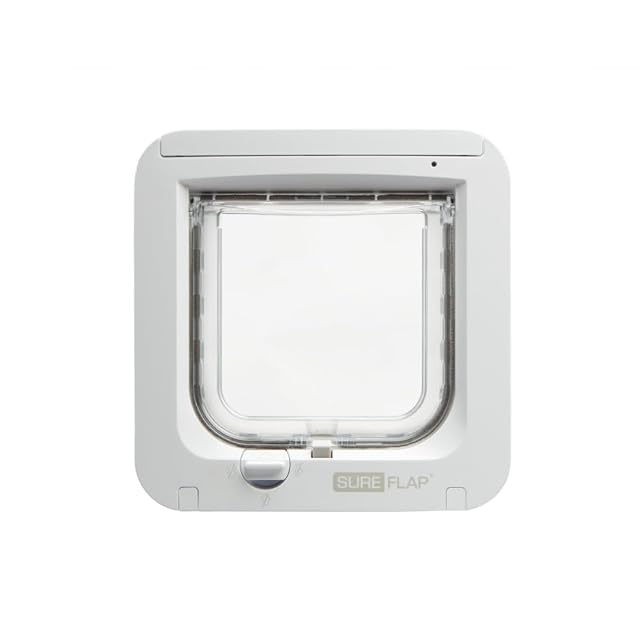
Check the height first
The bottom of the flap should be around chest height. Too high and an older or stiffer cat simply stops.
Then the tunnel
A long tunnel through a wall is a corridor to commit to. Prop the flap open and let the cat see daylight through it.
Then the chip
If entry is intermittent rather than refused, suspect the read. A tag on the collar removes the variable entirely.
Never force a cat through
Carrying a cat through a flap teaches it that the flap is where it gets handled. Food on the far side, flap propped, and patience.
This page is about equipment, not health. If an animal’s appetite, weight, drinking or toileting has changed, that belongs with a vet who can examine it — no appliance, and no page on this site, can tell you what a change means.
The questions owners ask
It used to work and now it does not. Why?
Most often the chip is reading intermittently — chips migrate. A collar tag costs a tenth of a new door and settles it. If the cat is also hesitant elsewhere, or has stopped going out at all, that is worth mentioning to a vet.
Does the noise of the lock matter?
To a cautious cat, a great deal. The click happens a fraction before the flap gives, and some cats read it as the door refusing them. Propping the flap open for a few days rebuilds the association.
Last reviewed 2026-08-17