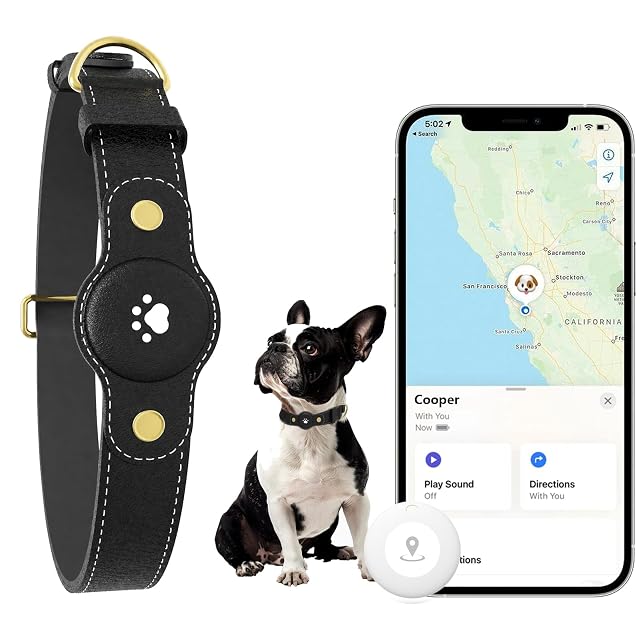
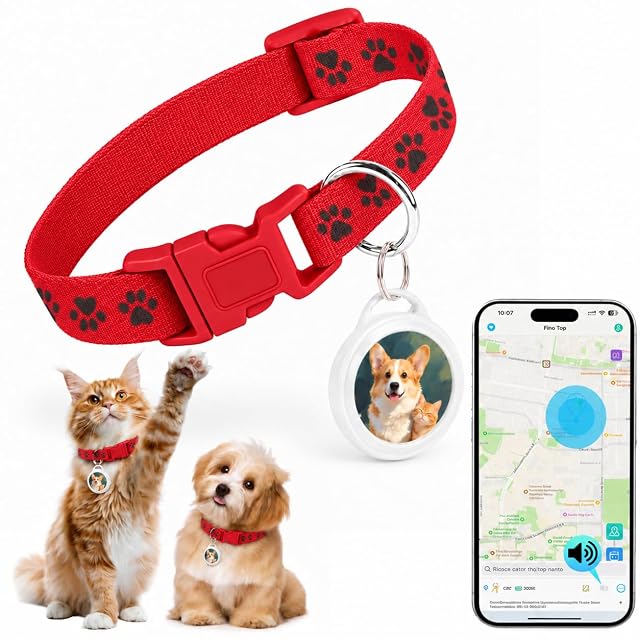
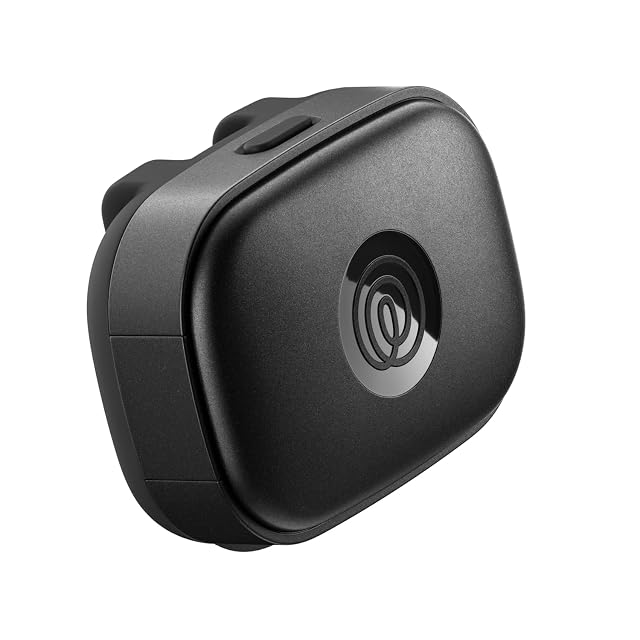
What we take from it Twenty-three dollars for a no-SIM tag on the DEONETAG app, with seven days of route history and an IP68 rating. The GALAWELLY listing on Amazon carries the same text at $39.99 — the seventeen-dollar difference buys nothing the pages distinguish.
What you are getting
A collar tag with no SIM and no subscription, paired through the free DEONETAG app, IP68 rated, keeping 7 days of route history. $22.99.
The same listing, seventeen dollars apart
The GALAWELLY listing on Amazon carries the same five bullets, the same DEONETAG app, the same IP68 rating, the same seven-day playback and the same QR-code sharing. It costs $39.99.
Nothing on either page distinguishes them. The barcodes differ — this is 0602397656381, galawelly is 0803173068767 — and galawelly publishes a size, 30 × 9 × 30 mm (1.18 × 0.35 × 1.18 in), which this one does not.
Three brands, nine shared digits
0602397656381 here. 0602397656312 on the Nilone tag. 0602397656107 on the SxingUxing tag. Nine leading digits in common across three brand names on the same shelf.
Nilone and SxingUxing go further and share a reference: “F 18B” and “F18B”.
What it does not have
No SIM, which the title announces as a feature. The shelf’s intro is blunt about what that costs: a device without a cellular connection cannot report a position to you from anywhere. It can only be noticed by a passing phone.
This page does not say which network does the noticing. The DEONETAG app is named, but the network behind it is not — unlike the MDTZULIK tag here, which names Google Find Hub, or Nilone and SxingUxing, which name Apple Find My.
Seven days of history, and QR sharing
Route playback over a week, and an encrypted QR code that lets somebody else see the animal’s live path with one scan. The sharing feature is genuinely useful when a dog is missing and several people are looking.
It depends entirely on the tag being within range of something. That is the condition every feature on this page rests on, and the page never states it.
What is not published
The network, the battery life, the weight, the dimensions, and the update interval. For a device whose whole argument is that it costs nothing to run, there is no figure here about how long it runs.
Availability
Read on the day this page was built: $23 at the American Amazon shop.
Read from Keepa on the day this page was last revised; stock and price both move without notice.
Prices quoted in this text were read on 2026-10-06. The live price is at the top of the page.
What we rate, and what we flag up
Strengths
Seventeen dollars cheaper than the identically worded galawelly listing
QR-code path sharing is useful when several people are searching
IP68 and a dedicated holder for tool-free fitting
Compromises
Never names the network that carries a position
No battery life, weight or dimensions published
Sold as a GPS tracker while announcing that it has no SIM
Specifications
Positioning
No SIM — network not named
App
DEONETAG, free
Water rating
IP68
Route history
7 days
Sharing
Encrypted QR code for live path
Subscription
None
Battery life
Not published
Weight
Not published
Update interval
Not published
Amazon reference
B0HG17PY3M
EAN
0602397656381
The questions owners ask
What is the difference from the galawelly tag at $39.99?
Nothing either page states. Both use the DEONETAG app, both claim IP68, both offer seven days of route playback and QR sharing, and the five bullets are the same text. galawelly publishes a dimension — 30 × 9 × 30 mm (1.18 × 0.35 × 1.18 in) — and this does not. On the published evidence the seventeen dollars buys the size statement.
Does "no SIM card" matter?
It is the whole question. A SIM is what lets a tracker send its own position; without one the device waits to be noticed by a phone passing within Bluetooth range. In a town that happens often. In open country it does not happen at all. The shelf’s intro puts it plainly: a Bluetooth tag finds a collar in the house, not an animal in a field.
How long does the battery last?
The listing does not say, which is unusual even in this group — the NGXDFL tag claims 365 days and the MDTZULIK twelve months on a coin cell. On a device sold for having no running costs, the battery is the only running cost there is, and this page leaves it out.
Today’s price and availability, for pet devices
Details checked on October 6, 2026.
This one and its buyer, among pet devices
A collar that goes missing around the house, not an animal that runs
What buyers actually choose
Amazon reports what buyers took in the month before this page was last checked: at least 100.
The figure is a floor, rounded by Amazon, and read through Keepa — it says what buyers picked, not what a maker claims.
Sources
Specifications: the manufacturer sheet for pet devices and the matching Amazon product page. Prices and availability: Keepa. Every figure on this page names its source.