What you are getting
An automatic feeder with a 1080p camera on a 145° wide-angle lens, infrared night vision, two-way audio, motion and sound detection, and programming for 10 meals a day at 1–50 portions each. Recording to microSD up to 256 GB — card not included — or to a paid cloud plan. $122.93.
It feeds, which nothing else on this page does
Every other camera here throws a treat. This one serves a ration on a schedule, and the camera is there to watch it happen: “monitor eating habits day and night”.
That changes what it is for. A treat camera is for reassurance and training; a feeder camera is for a household where the meal has to happen whether anyone is home or not, and where seeing it happen is the point. The smart bowls shelf on this site is where the weighing versions live; this one counts portions, as the feeders shelf explains, and a portion is a rotor turn rather than a gram.
The microSD slot is the reason it belongs on this shelf
The buying advice on this page: “a model with a microSD slot keeps its footage on your side”, and “a camera whose recordings expire after a few hours is a live view with extra steps”.
PETLIBRO offers both routes and says so: “review recorded videos supports up to 256 GB micro SD card (package not included) or Video Cloud (paid subscription)”.
Two things follow. The card is yours and holds far more than the 32 GB the Enabot robot ships with — but you have to buy it, and PETLIBRO does not publish the cloud price for anyone who would rather not.
145 degrees, the widest lens on this page
Against 125° on the Geeni and 110° on the Petcube. On a feeder that stands on the floor, a wide lens is doing real work: the animal arrives from an angle, not from in front.
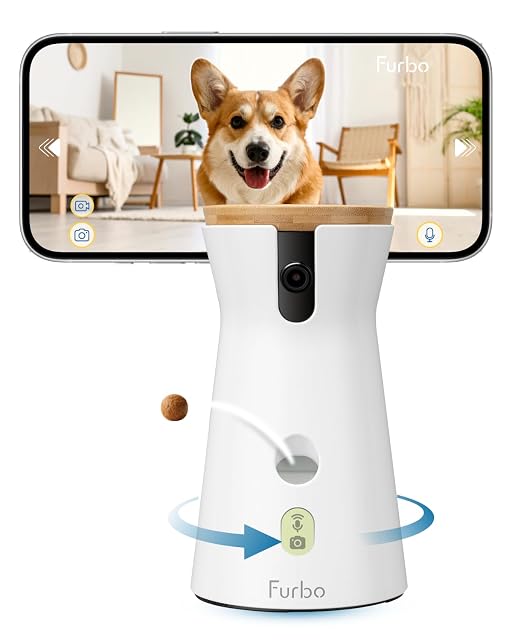
Furbo’s motorized 360° rotation still sees more of a room, by turning. This sees more at once, which is the better property for watching one spot — the bowl.
Alerts that include the machine, not only the animal
“Instant notifications for low food levels, food blockage, motion, or sound detection.”
Food blockage is the useful one and it is a feeder alert rather than a camera alert. The feeders shelf on this site names jamming as the failure that decides whether one of these machines gets kept, because a feeder that silently stops is worse than no feeder at all. A camera plus a blockage alert means you find out twice.
Ten meals, fifty portions, shared control
“Customize up to 10 meals per day with 1–50 portions per meal, track feeding history, and share control with family members.” Ten seconds of recorded voice per meal, played at mealtime.
What a portion weighs is not published, which is the standing gap across every feeder in this survey.
What is not published
No cloud subscription price, no hopper capacity, no portion weight, no kibble size range, no night vision distance, no frame rate, and no audio latency. On a device whose paid tier is named, the missing price is the gap that matters: the buying advice on this shelf is to read the free tier first, and here the free tier is “buy a card”.
2.4 and 5 GHz both supported, which makes it the only device on this page that is not 2.4 GHz only.
Availability
Read on the day this page was built: $123 at the American Amazon shop.
Read from Keepa on the day this page was last revised; stock and price both move without notice.
Prices quoted in this text were read on 2026-10-06. The live price is at the top of the page.