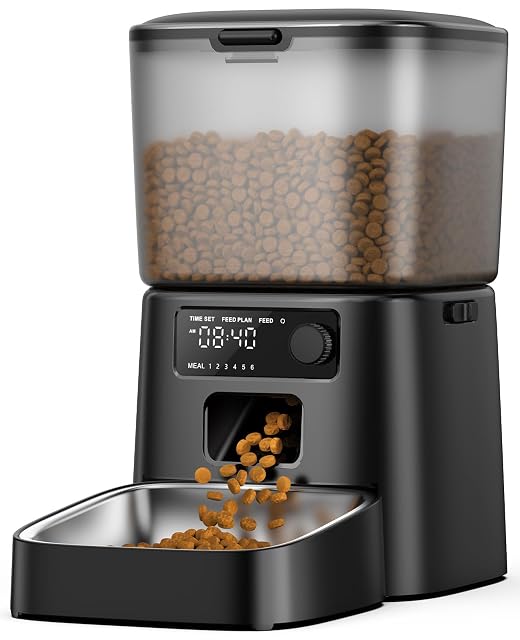
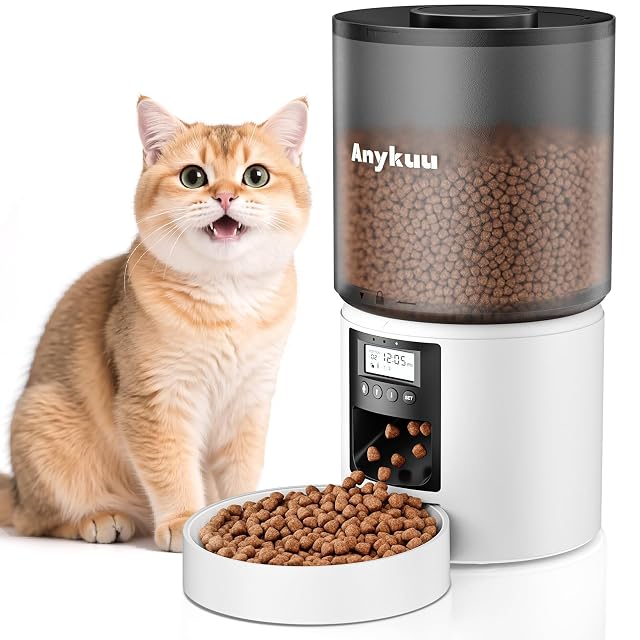
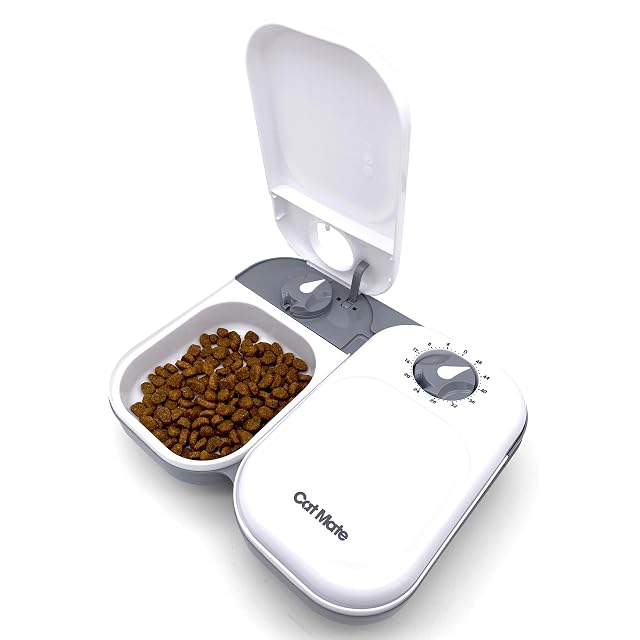
Weigh one portion
Before anything else. Dispense one portion onto a kitchen scale, note the weight, and build the schedule from the daily ration your vet or the food’s own guidance gives — not from the number of portions.
Run it for three days while you are home
Set the real schedule and watch. Jams, missed meals and a rotor that struggles with your kibble all show up in three days, and none of them show up in the shop.
Fit the backup batteries now
Not when you leave. A backup you have not installed is not a backup.
Check the kibble size
Large or flat pieces are what stall a rotor. If yours are over about 12 mm (0.47 in), check the maker’s stated maximum before trusting the machine with a week.
This page is about equipment, not health. If an animal’s appetite, weight, drinking or toileting has changed, that belongs with a vet who can examine it — no appliance, and no page on this site, can tell you what a change means.
The questions owners ask
How do I know how much a portion is?
Weigh it. Dispense a single portion into a bowl on a kitchen scale and note the grams. Portion counts are volumes, and volumes vary between bags — the machines that publish a gram figure are the exception.
Does it keep feeding in a power cut?
Check the manual, because some feeders keep only the clock alive on batteries. That difference is invisible until the day it matters, and it is the single most important line in the manual.
Last reviewed 2026-08-17