Skip to content

The best deshedding brush for a double coat

A deshedding tool that is the wrong size either skates over the undercoat or takes out living coat. Sizing is the whole decision, and only one brand on this site publishes it properly.

Size by the coat, not by the dog

Weight band and coat length, both. A 30 kg (66.1 lb) short-coated labrador and a 30 kg (66.1 lb) long-coated retriever need different tools, and the packaging says so if you read it.

The rake comes first

On a coat that knots, a rake comb opens it before anything with an edge goes near it. Running a deshedding blade into a knotted coat pulls skin and blunts the tool — the maker’s own listings say to brush first.

Where every brush stops

A mat felted against the skin. Scissors in the hands of someone who can see what is underneath, which usually means a groomer.

Which one suits your animal?

Your animal has a true double coat
An undercoat rake reaches the layer that sheds; a surface brush does not.
The coat is matted
Brushing through mats hurts. Mats need separating or cutting out first, and that is often a groomer's job.
Your animal dislikes being brushed
Tool comfort and short sessions matter more than efficiency, because the tolerance is what you are managing.
You want less hair in the house
Frequency beats tool choice: a modest brush used often removes far more than a good one used rarely.

Picking by the animal

Seasonal shedding

The heavy weeks where an undercoat rake earns its place. Nothing else moves that volume of hair.

Routine maintenance

A slicker or a comb between the heavy periods, which is what keeps mats from forming at all.

Finishing

A bristle brush to lay the coat and spread oils. It does little for shedding and a lot for how the coat looks.

Checking the skin

Grooming is when you find lumps, ticks and hot spots. That is arguably its most useful function.

The points that make the difference

Rake, slicker or blade
A rake pulls loose undercoat; a slicker works the surface; a bladed tool cuts hair. They do different jobs and only the first addresses undercoat shedding.
Tooth length and spacing
Teeth must reach the undercoat without gouging skin. Too short does nothing on a thick coat; too aggressive is uncomfortable.
Whether the tool cuts
Some deshedding tools have a blade edge. Used too often or too hard they thin and damage the topcoat, and that is not reversible quickly.
Handle comfort
A long session is long for you too. A handle that cramps your hand shortens the session and the animal notices.
Suitability for the coat
Double coats, curly coats and single coats need different tools. A tool that suits one can damage another.

Which figure for which animal

The coatThe toolWhat to avoid
Thick double coatUndercoat rakeShaving the coat
Curly or woollyComb and slickerBladed deshedders
Short single coatRubber brush or mittLong-tooth rakes
Matted anywhereSeparate or cut the matBrushing through it

What owners get wrong

Shaving a double coat to stop shedding
The undercoat insulates against heat as well as cold, and the topcoat may not grow back the same. Deshedding is the intervention, not clipping.
Using a bladed deshedder every session
It cuts hair as well as removing it. Frequent hard use thins the topcoat, and the damage shows up over months.
Brushing through mats
It hurts and it tightens the mat against the skin. Mats are separated by hand, cut out, or left to a groomer.
Long sessions with a reluctant animal
Grooming that becomes a fight gets harder every time. Short, frequent and calm beats thorough and resented.

By the household and the animal

The heavy shedder's owner
An undercoat rake, used often during the moult, plus a comb to check for mats.
The reluctant animal
A gentler tool, shorter sessions and patience. The best tool is the one tolerated.
The house-keeping priority
Frequency over equipment: brushing outdoors two or three times a week does more than any single tool.

Cleaning, refills and working life

Grooming tools are simple but they collect hair, skin oils and skin debris, and a dirty tool is unpleasant against skin. Rakes and slickers also bend and blunt with use, and a bent tooth catches rather than combs.

  • Clear the tool of hair after every session rather than at the end of the moult.
  • Wash and dry it periodically; skin oils build up on the teeth.
  • Check for bent or missing teeth, which catch and pull.
  • Store it where the teeth cannot be bent by other objects.

Safety

The risks are skin injury and a grooming session that turns into a struggle.

  • Work with a light hand: brush burn from a slicker is a real and common injury.
  • Never force a tool through a mat against the skin.
  • Stop if the animal shows real distress rather than pushing to finish.
  • Check the skin as you go for lumps, ticks and irritation, and see a vet about anything that looks wrong.

Our picks, and what decided each

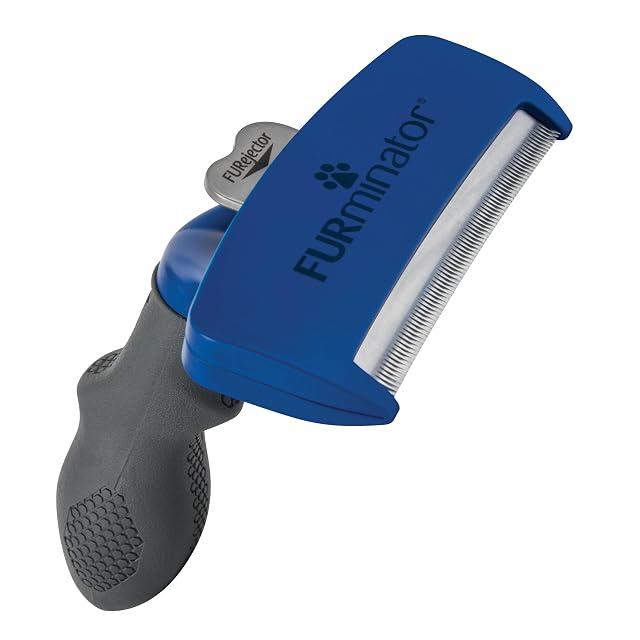
  1. FURminator deShedding L long hair

    Dogs 23–41 kg (50.7 to 90.4 lb) · coat over 5 cm (2 in) · stainless deshedding edge

    The long-hair deShedding tool for large dogs: a stainless edge that reaches through the topcoat and lifts the undercoat, sized for animals of 23 to 41 kg (50.7 to 90.4 lb).

    Best for: A large long-coated dog in moult — golden retrievers, collies, shepherds with a full undercoat.
    8.1/10

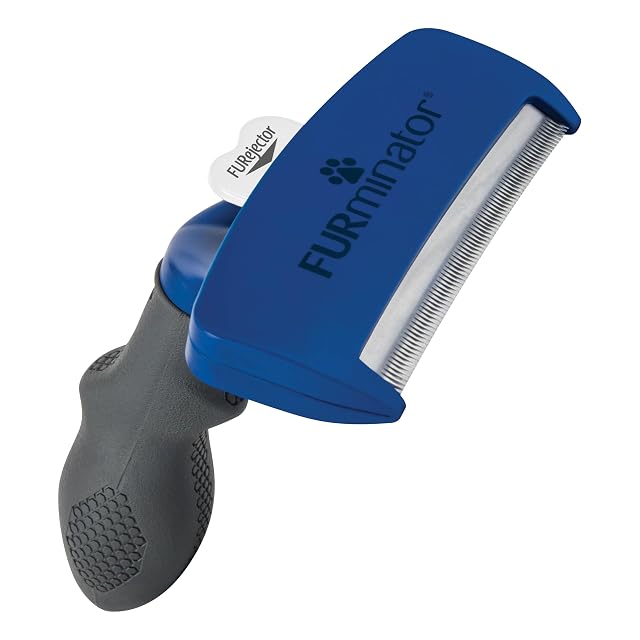
  2. FURminator deShedding L short hair

    Dogs 23–41 kg (50.7 to 90.4 lb) · coat under 5 cm (2 in) · stainless deshedding edge

    The short-hair version of the same tool, for large dogs whose coat is under 5 cm (2 in) — labradors, boxers, staffies with a dense undercoat and nothing to grip.

    Best for: Labradors, boxers, beagles — short coats that shed constantly and defeat ordinary brushes.

    8.1/10

    ≈ $56

The questions owners ask

How often should I use a deshedding tool?

One to two sessions a week is the manufacturer’s own guidance, and it is a ceiling rather than a target. These tools cut as well as lift; daily use on the same patch thins a coat instead of clearing the moult.

Short-hair or long-hair version?

The cut-off is 5 cm (2 in) of coat length. A long-hair tool on a short coat rides above the undercoat entirely, and a short-hair tool on a long coat drags.

What is a double coat?

A soft insulating undercoat beneath a coarser topcoat. It is the undercoat that sheds heavily and that a rake is designed to reach.

Should I shave a double-coated dog in summer?

Generally no. The coat insulates against heat as well as cold, and the topcoat may not grow back the same. Deshedding is the usual answer instead.

How often should I brush during a moult?

Often and briefly rather than rarely and thoroughly. Several short sessions a week remove more hair and are far better tolerated.

Do bladed deshedding tools damage the coat?

Used hard or too often they cut and thin the topcoat. Used sparingly and lightly they are a tool like any other.

What do I do about mats?

Do not brush through them. Separate them gently by hand if small, cut them out carefully, or take the animal to a groomer for anything tight against skin.

Will brushing stop the shedding?

It moves the hair from the house to the brush, which is what you actually want. Shedding itself is normal and seasonal.

Each product, and the animal it was chosen for

FURminator deShedding L long hair

For the animal that: A large long-coated dog in moult — golden retrievers, collies, shepherds with a full undercoat.

Its main plus: Sized by weight AND coat length — the only brand here that separates the two

Its main minus: A deshedding edge cuts hair as well as pulling it — over-use thins a coat

Read the full review →

FURminator deShedding L short hair · $56

For the animal that: Labradors, boxers, beagles — short coats that shed constantly and defeat ordinary brushes.

Its main plus: The right geometry for a short dense coat, where long-hair tools do nothing

Its main minus: Short-coated dogs moult continuously rather than seasonally — this is a weekly commitment

Read the full review →

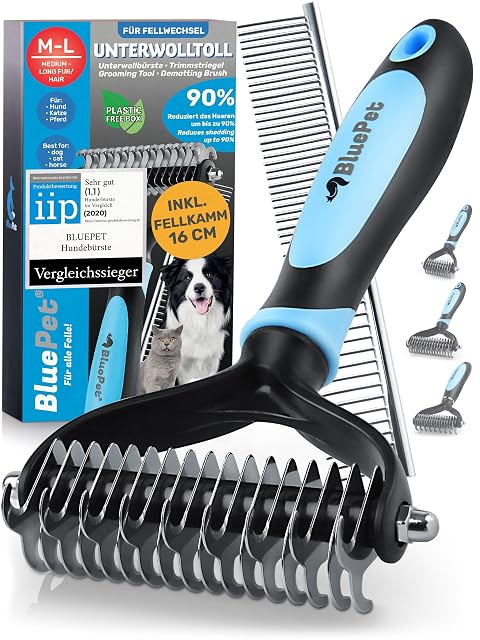
BluePet Undercoat brush

For the animal that: Long-coated dogs and cats with a heavy undercoat and the beginnings of matting.

Its main plus: The best-selling brush of its type in the German catalog at the time of writing

Its main minus: Not listed on Amazon US at the time of checking

Read the full review →

What else you will need

Refills, liners and spares from the same aisle, at the price we read. Confirm they suit the product you choose before ordering: it turns on the model and the part number, which the listing gives.

In a line

What this list is based on

The products above are drawn from the catalog of this site. Specifications are those the manufacturer and the Amazon listing publish; prices are what Keepa recorded on the date shown, and both move. The order uses declared specifications, stated strengths set against stated limits, and price. Nothing here has been given to an animal by us, and the page makes no such claim.

Last checked on

Prices quoted in these summaries are dated readings. The live price is shown next to each product.

The tool we use ourselves

Chosen your machine? Now buy it at the right price.

Litter boxes and grooming vacuums swing by a hundred dollars or more across the year, and the biggest "discounts" often land at prices the same model sold for six weeks earlier. UniverTrack tracks the real price history across retailers, spots fake reductions, and alerts you when it is genuinely the moment to buy.

Real price historyBuy-now alertsAI buying assistant
Try free for 14 days →
No commitment · Cancel in one click · 5 languages