Skip to content

The best GPS tracker for an outdoor cat

Every genuine tracker carries a SIM and therefore a monthly plan. Compare three years of plan alongside the hardware, or the comparison means nothing.

Add up three years first

At around €5 a month, the plan overtakes the hardware inside a year. Two trackers that differ by €20 at the till can differ by far more over the life of the collar.

Then weight, then refresh rate

A 32-gram unit is unremarkable on a large cat and a great deal on a small one. A one-second live refresh is a search tool for the last two hundred meters, not a setting to leave running.

And the collar

Breakaway buckle, always, and check it with the tracker fitted. A collar that cannot release is a worse hazard than a cat that cannot be found.

Which one suits your animal?

Your cat roams a wide area
A GPS tracker with mobile coverage is the only thing that finds it, and it needs a subscription.
Your cat stays near the house
A radio or Bluetooth tag may be enough, with no subscription and far longer battery life.
Your cat is small or light
Weight is the constraint. A tracker too heavy for the animal is not an option whatever its features.
You want it as a lost-cat insurance
Battery life is what matters, because the tracker is useless if it is flat when needed.

Picking by the animal

Finding a cat that has not come home

The core use, and the one that justifies a subscription. Live location is what turns a search into a walk.

Knowing where it goes

History and mapping, which is interesting and occasionally reveals a second household feeding it.

A virtual boundary

Alerts when the cat leaves an area. Useful in some settings, noisy in others.

Identification

A tracker is not identification. A microchip is, and it is what a vet or shelter will actually read.

The points that make the difference

Weight and size
The first constraint on a cat. A tracker that is too heavy affects the animal's movement and is not worth any feature it offers.
Battery life and charging
Live GPS drains batteries. Real-world life depends on how often it reports, and a tracker charged weekly is a habit you must actually keep.
Whether it needs a subscription
GPS trackers use mobile networks and almost always require one. Radio and Bluetooth tags do not, and they trade range for that.
Collar safety
A cat collar should release under load. A tracker attached to a collar that cannot break away is a hazard, not a safety device.
Coverage where you live
A GPS tracker depends on mobile coverage. In a poor-signal area the specification means nothing.

Which figure for which animal

Your catThe technologyThe catch
Roams widelyGPS with mobile networkSubscription and charging
Stays near homeRadio or Bluetooth tagShort range
Small or lightWhatever is lightestFewer options
Any catA microchip as wellIt does not locate, it identifies

What owners get wrong

Treating a tracker as a replacement for a microchip
A tracker falls off, runs flat or breaks. A microchip is what a vet or shelter reads, and it is the identification that actually brings a cat home.
Using a collar that cannot break away
A cat collar that catches on a branch or a fence must release. A secure collar with a tracker on it is a serious hazard.
Ignoring how often it needs charging
A flat tracker finds nothing. If the routine is weekly and you will not keep it, choose a longer-life technology instead.
Assuming coverage
GPS trackers report over mobile networks. In an area with poor signal, the device is far less useful than the box suggests.

By the household and the animal

The wide-roaming cat
A GPS tracker with a subscription, charged on a routine you will actually keep.
The garden cat
A lightweight radio or Bluetooth tag, no subscription, and much less to manage.
Every cat
A microchip and up-to-date registration details, which is the part people forget when they move house.

Cleaning, refills and working life

A tracker lives outdoors on an animal that goes through hedges and rain, so its weaknesses are the charging contacts, the seal and the collar attachment. All three degrade quietly and are found only when the device is needed.

  • Check the collar attachment regularly; it is what actually fails.
  • Keep the charging contacts clean and dry.
  • Test the tracker's location occasionally rather than assuming it works.
  • Update the registered details on the microchip when you move.

Safety

The main risk is the collar itself rather than the electronics.

  • Use a quick-release collar and check the fit as the cat gains or loses weight.
  • Check the skin under the collar for rubbing.
  • Keep charging cables and small parts away from animals.
  • Do not rely on the tracker alone: microchip, registration and a recent photo matter more when a cat is lost.

Prices quoted in this text were read on 2026-08-17. The live price is at the top of the page.

Our picks, and what decided each

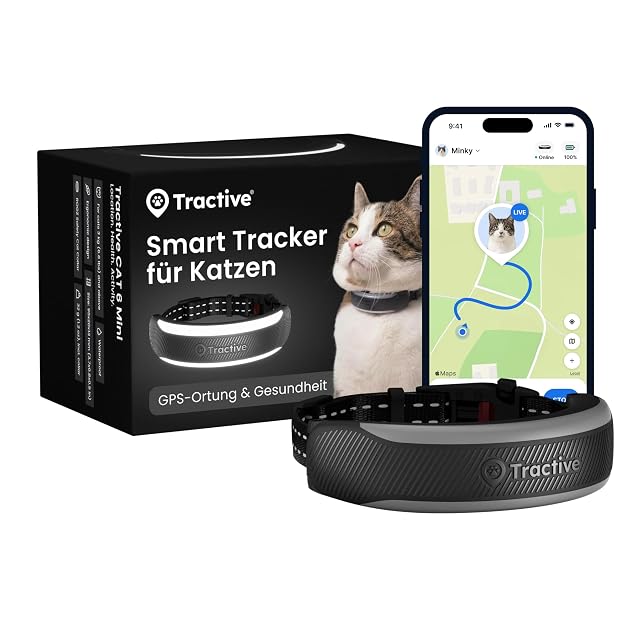
  1. Tractive GPS Cat Mini (2026)

    32 g (1.1 oz) · integrated collar · LTE/2G · subscription from €5/month

    Tractive’s cat tracker: 32 grams including an integrated collar with a weight-adjustable safety catch, live tracking with no range limit, and a subscription that starts at €5 a month.

    Best for: An outdoor cat, where the question is which field it is in rather than which room.

    7.8/10

    ≈ $72

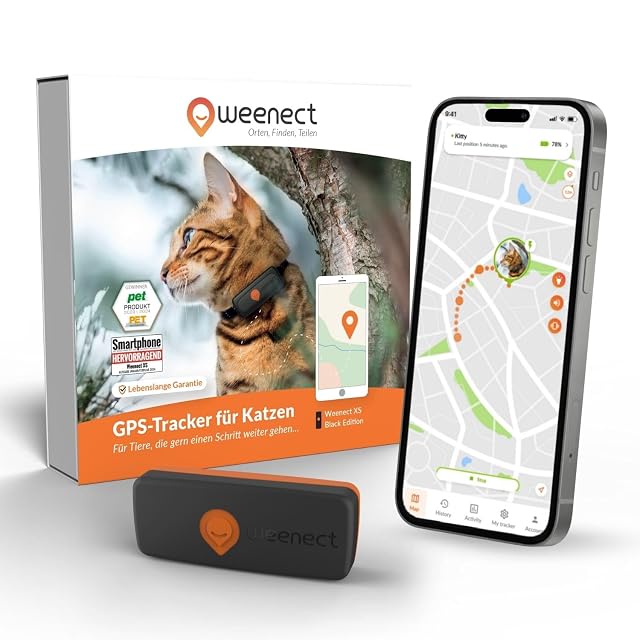
  2. Weenect XS for cats

    Multi-network SIM · 1-second Superlive mode · 4G LTE-M/NB-IoT and 2G

    The smallest tracker here, with a multi-network SIM and a Superlive mode that returns a new position every second. A subscription is required, as everywhere in this family.

    Best for: A cat that roams, where size and a fast live refresh matter more than health graphs.

    7.2/10

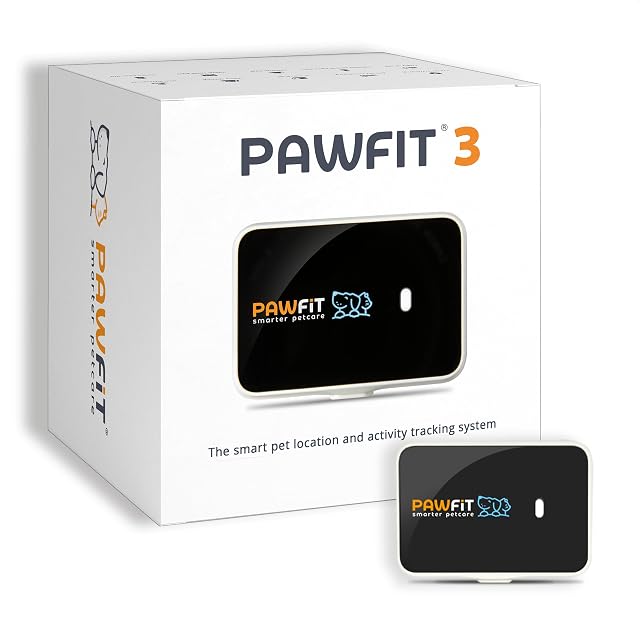
  3. Pawfit 3

    4G · Europe and North America · LED light · speaker · escape alerts

    A 4G tracker with an LED light on the collar, a built-in speaker you can talk through, and escape alerts when the animal leaves a safe zone.

    Best for: Dogs that get lost after dark, and anyone who has stood in a field knowing the dog is within fifty meters and invisible.

    7.8/10

The questions owners ask

Are Bluetooth tags an alternative?

No. They find a collar in the house, not an animal in a field. The cellular connection is what this category is for, and it is what the subscription pays for.

Is a tracker safe on a cat collar?

Only with a breakaway buckle that still releases with the tracker’s weight on it. Test that after fitting — it takes five seconds and it is the thing that matters most.

Do GPS trackers need a subscription?

Almost always, because they report their position over a mobile network. Radio and Bluetooth tags avoid it and trade away range.

Is a tracker a substitute for a microchip?

No. A tracker falls off or runs flat; a microchip is what a vet or shelter reads. The chip is the identification that brings a cat home.

How long does the battery last?

It depends far more on how often the tracker reports than on the stated figure. Frequent live updates drain a battery quickly.

Is a tracker too heavy for a cat?

Weight is the first constraint, especially on a small or young cat. It should not affect how the animal moves.

What kind of collar should I use?

A quick-release one. A cat collar that cannot break away is a hazard when it catches on a branch or a fence.

Will it work everywhere?

GPS trackers depend on mobile coverage. In an area with poor signal the device becomes far less useful than its specification suggests.

Each product, and the animal it was chosen for

Tractive GPS Cat Mini (2026) · $72

For the animal that: An outdoor cat, where the question is which field it is in rather than which room.

Its main plus: Designed for cats specifically: 32 g (1.1 oz) with a collar that releases under load

Its main minus: 32 g (1.1 oz) is still 32 g (1.1 oz) on a 3.5 kg (7.7 lb) cat — check it against your animal

Read the full review →

Weenect XS for cats

For the animal that: A cat that roams, where size and a fast live refresh matter more than health graphs.

Its main plus: A position every second in Superlive: the difference between following a cat and guessing where it went

Its main minus: Subscription required, and Weenect leads with that rather than hiding it

Read the full review →

Pawfit 3

For the animal that: Dogs that get lost after dark, and anyone who has stood in a field knowing the dog is within fifty meters and invisible.

Its main plus: The LED is the feature nobody thinks of until dark — it turns a map position into a visible animal

Its main minus: Subscription required, like every tracker here

Read the full review →

What else you will need

Refills, liners and spares from the same aisle, at the price we read. Confirm they suit the product you choose before ordering: it turns on the model and the part number, which the listing gives.

In a line

Comparisons that help you decide

Direct comparisons already published between two products from this guide or this aisle.

What this list is based on

The products above are drawn from the catalog of this site. Specifications are those the manufacturer and the Amazon listing publish; prices are what Keepa recorded on the date shown, and both move. The order uses declared specifications, stated strengths set against stated limits, and price. Nothing here has been given to an animal by us, and the page makes no such claim.

Last checked on

The tool we use ourselves

Chosen your machine? Now buy it at the right price.

Litter boxes and grooming vacuums swing by a hundred dollars or more across the year, and the biggest "discounts" often land at prices the same model sold for six weeks earlier. UniverTrack tracks the real price history across retailers, spots fake reductions, and alerts you when it is genuinely the moment to buy.

Real price historyBuy-now alertsAI buying assistant
Try free for 14 days →
No commitment · Cancel in one click · 5 languages