Skip to content

The best microchip cat flap for your door

Before comparing features, answer two questions: how many digits is your cat’s chip, and is the flap going into a door, a pane of glass or a wall?

The chip decides the shortlist

A 15-digit chip opens every flap in this guide. An older number narrows it sharply, and a chip that reads intermittently — usually one that has migrated — is solved by a collar tag rather than a different door.

The wall decides the budget

A flap is designed for a door panel. Everything thicker needs extenders that cost a real fraction of the flap.

The app is last

A curfew is genuinely useful and doubles the price. Decide on the chip and the wall first; then decide whether you want the flap to lock itself at night.

Which one suits your animal?

Neighborhood cats come in
A microchip flap is the specific solution, and it is the reason the product exists.
You have a glass door
Fitting is the whole problem: glass needs drilling by a professional and a mounting adaptor.
You have several cats
Check the number of chips the flap stores, and expect a training period for each.
You want to control when they go out
A curfew function exists on some models, and that is a different requirement from chip recognition.

Picking by the animal

Keeping other cats out

The core use. Chip recognition is what stops the neighbor's cat eating the food and spraying indoors.

Keeping a cat in at night

A curfew or one-way setting, which suits areas with roads or wildlife concerns.

Separating animals indoors

A flap in an internal door that only one animal can pass. Useful for feeding and for litter access.

Ordinary free access

A plain flap does this and costs far less. Not every household needs chip recognition.

The points that make the difference

The mounting surface
Wood, uPVC, glass or a wall. Glass and walls need adaptors and often a professional, and that decides the real cost of the project.
Chip compatibility
Most flaps read the common chip standards, but not all chips are readable by all flaps. It is worth confirming against your cat's actual chip.
Battery life and warning
A dead flap locks the cat out. A model that warns before the batteries fail is the difference between an inconvenience and a problem.
Locking modes
In only, out only, both, locked. It is what turns a flap into a curfew tool, and models differ in how easily it is set.
The tunnel length
A thick door or a wall needs a tunnel extension. Fitting one into a wall without it is where installations go wrong.

Which figure for which animal

Your doorWhat it needsThe difficulty
Wooden doorA jigsaw and careStraightforward
uPVC doorA panel or careful cuttingModerate
Glass door or windowDrilled hole and adaptorProfessional job
WallTunnel extensionThe most work

What owners get wrong

Buying before checking the mounting
Glass and walls change the job entirely. Deciding where the flap goes, and what that involves, comes before choosing a model.
Fitting it too high or too low
The cat should step through without climbing or crouching. An awkward height is the commonest reason a cat refuses a new flap.
Expecting instant acceptance
The motor click of a microchip flap is new and some cats refuse it. Propping it open during a training period is the usual approach.
Ignoring the battery warning
A flat flap locks. Replacing batteries when warned rather than when it fails avoids a cat shut outside overnight.

By the household and the animal

The household with an intruder cat
A microchip flap, which is the only thing that actually solves the problem.
The road-side house
A flap with a curfew setting, so the cat is in at the times that matter.
The multi-cat home
Chip storage for every animal, and patience while each learns the new flap.

Cleaning, refills and working life

A cat flap lives in weather and takes constant small impacts. The seal, the magnets and the battery contacts are what degrade, and a drafty or sticky flap is usually the seal rather than the mechanism.

  • Clean the flap and the seal; grit and hair stop it closing properly.
  • Replace batteries at the warning rather than at failure.
  • Check the tunnel and frame for water ingress after heavy weather.
  • Wipe the chip reader area, which is where dirt affects recognition.

Safety

The concerns are the cat being locked out and the door itself as a security point.

  • Keep spare batteries, so a warning never becomes a cat outside overnight.
  • Check the flap cannot be reached from outside to unlock a door.
  • Make sure the cat can operate the flap easily, especially an older animal.
  • Fit at a height the cat steps through rather than climbs into.

Our picks, and what decided each

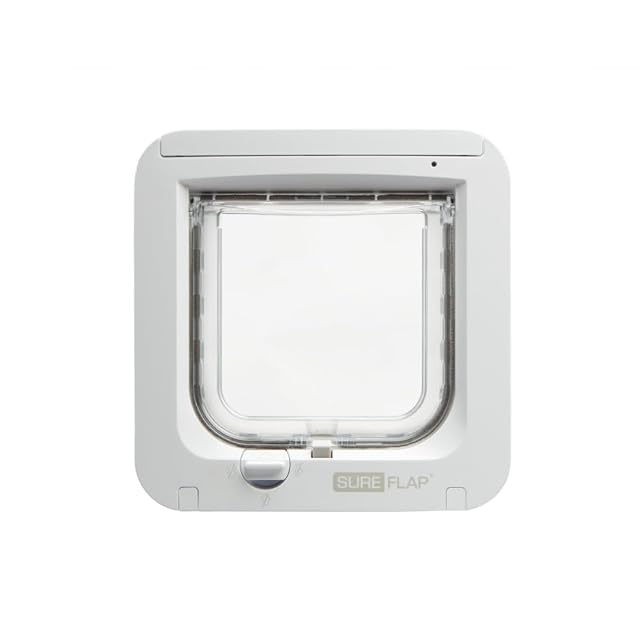
  1. SureFlap Microchip Cat Flap

    Microchip · 4 × AA · up to 12 months of battery · 4 locking modes

    The plain SureFlap: it reads your cat’s chip, keeps the neighbor’s cat out, runs a year on four AA cells, and has no app at all. It is the one most households actually need.

    Best for: One or two cats, a wooden door, and no interest in an app — which describes most homes.

    8.2/10

    ≈ $135

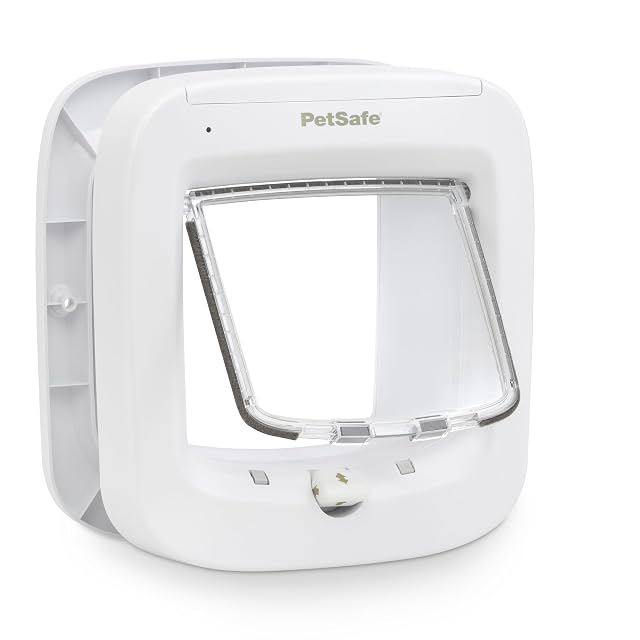
  2. PetSafe Microchip Cat Flap

    15-digit chips · up to 40 pets · 4 manual modes · weather seals

    The cheapest microchip flap here apart from the Cat Mate, reading 15-digit chips for up to 40 animals, with four manual locking modes and double magnetic closing points.

    Best for: A first microchip flap on a budget, where the cat’s chip is a modern 15-digit one.

    7.0/10

    ≈ $110

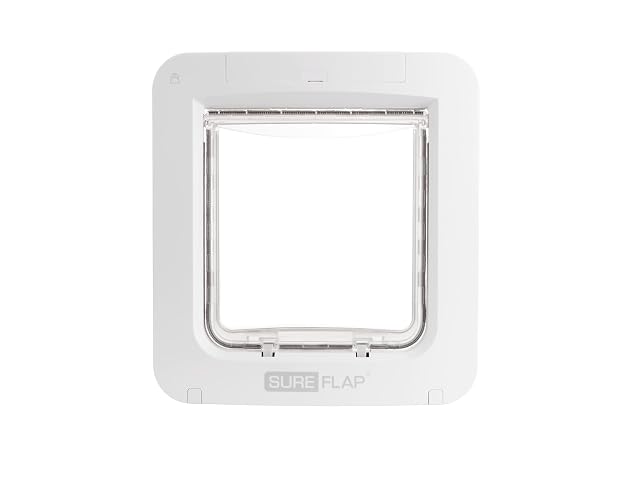
  3. SureFlap Microchip Pet Door Connect

    Microchip or RFID tag · app · timed curfew · 178 × 170 mm (7.01 × 6.69 in) opening

    The large Connect flap: app control, a programmable curfew, and an opening of 178 × 170 mm (7.01 × 6.69 in) for big cats and small dogs.

    Best for: A household that wants the cat in before dark without standing at the door — and a cat too big for a standard flap.

    8.8/10

    ≈ $260

The questions owners ask

How do I check the chip standard?

Any vet can read it in seconds and it is on the registration paperwork. Fifteen digits is FDX-B and works with every flap here; 9 or 10 digits is an older standard that only some models read.

What does a wall installation add?

Tunnel extenders, at 50 mm (1.97 in) each, proprietary, not included. A 300 mm (11.8 in) masonry wall needs about five — that arithmetic belongs in the purchase decision, not after the hole is cut.

Will it work with my cat's microchip?

Most flaps read the common standards, but not every chip is readable by every flap. Confirm against your cat's actual chip number and type before buying.

Can I fit one in a glass door?

Only with a hole drilled by a glazier and a mounting adaptor. It is a professional job and it changes the cost of the project considerably.

My cat refuses the new flap. What now?

Prop it open at first so the motor does not click, then let it operate once the cat is confident. Height and position matter too.

What happens when the batteries die?

The flap locks, which means a cat outside. Models that warn in advance are worth choosing, and spare batteries are worth keeping.

Can it keep my cat in at night?

Models with a curfew or one-way locking do exactly that. It is a separate feature from chip recognition, so check for it specifically.

How many cats can one flap handle?

It depends on how many chips the model stores, which varies. Each cat also needs its own training period on the new flap.

Each product, and the animal it was chosen for

SureFlap Microchip Cat Flap · $135

For the animal that: One or two cats, a wooden door, and no interest in an app — which describes most homes.

Its main plus: A year on four AA cells — no charger, no cable, no account

Its main minus: No app, no history, no notification when the cat comes and goes

Read the full review →

PetSafe Microchip Cat Flap · $110

For the animal that: A first microchip flap on a budget, where the cat’s chip is a modern 15-digit one.

Its main plus: Cheaper than the plain SureFlap and does the same core job

Its main minus: Reads 15-digit chips: an older 9 or 10-digit chip will not work

Read the full review →

SureFlap Microchip Pet Door Connect · $260

For the animal that: A household that wants the cat in before dark without standing at the door — and a cat too big for a standard flap.

Its main plus: The curfew is the feature: the flap locks itself at night whether or not you remember

Its main minus: Needs the Sure Petcare hub to connect — check what is in the box before ordering

Read the full review →

What else you will need

Refills, liners and spares from the same aisle, at the price we read. Confirm they suit the product you choose before ordering: it turns on the model and the part number, which the listing gives.

In a line

Comparisons that help you decide

Direct comparisons already published between two products from this guide or this aisle.

What this list is based on

The products above are drawn from the catalog of this site. Specifications are those the manufacturer and the Amazon listing publish; prices are what Keepa recorded on the date shown, and both move. The order uses declared specifications, stated strengths set against stated limits, and price. Nothing here has been given to an animal by us, and the page makes no such claim.

Last checked on

Prices quoted in these summaries are dated readings. The live price is shown next to each product.

The tool we use ourselves

Chosen your machine? Now buy it at the right price.

Litter boxes and grooming vacuums swing by a hundred dollars or more across the year, and the biggest "discounts" often land at prices the same model sold for six weeks earlier. UniverTrack tracks the real price history across retailers, spots fake reductions, and alerts you when it is genuinely the moment to buy.

Real price historyBuy-now alertsAI buying assistant
Try free for 14 days →
No commitment · Cancel in one click · 5 languages