Skip to content

The best pet fountain for a cat that will not drink

Cats disagree about moving water. A fountain with one flow mode is a bet; one with three is an adjustment. This guide is ordered on that, then on capacity.

Flow modes are chances

Gentle flow, a jet, bubbling. Which one a cat accepts is not predictable, and a fountain that offers three converts a purchase that either works or does not into one you can adjust.

The drinking surface matters more than the shape

Wide and shallow keeps whiskers out of the sides of a bowl, and stainless or ceramic resists the scratching that turns plastic into a biofilm trap.

Then capacity

One cat, two liters is fine. Two cats or a dog, and you are topping it up every other day — which is how pumps end up running dry.

Which one suits your animal?

Your cat drinks little
Moving water encourages many cats to drink more, and that is the whole reason for a fountain.
Your animal is frightened by the pump
A quiet pump matters more than anything else, and some animals prefer a still bowl.
You do not want to clean often
A fountain is a weekly cleaning commitment. A bowl is not, and that is a fair reason to choose one.
Your animal has a health issue
Water intake is a veterinary question first. A fountain can help, but the vet decides what matters.

Picking by the animal

Encouraging a cat to drink

The core use. Many cats drink more from moving water than from a bowl, and increased intake is the reason to try one.

Multiple animals

Capacity becomes the criterion, and one fountain does not stop resource guarding in a tense household.

Keeping water fresh

Circulation and filtration keep water more palatable than a bowl standing all day.

Dogs

Fountains exist for dogs too, with different capacity and much more mess.

The points that make the difference

Pump noise
A fountain the animal avoids is worse than a bowl. Noise is the specification that decides acceptance and it varies more than the marketing suggests.
How easy it is to clean
Fountains grow biofilm. One that comes apart fully and goes in a dishwasher gets cleaned; one with hidden channels does not.
Material
Ceramic and stainless steel are easier to keep clean than plastic and are less associated with chin irritation in cats.
Filters and their cost
Most fountains take replaceable filters, which are a recurring cost. Whether they are needed depends on your water.
Capacity versus dry running
A pump that runs dry can be damaged. Capacity matters most if you are away all day.

Which figure for which animal

Your situationWhat to prioritizeWhat to accept
A cat that drinks littleMoving water, quiet pumpWeekly cleaning
Several animalsCapacityMore frequent refilling
Chin irritationCeramic or steelHeavier, more fragile
Long days outLarger reservoirPump must not run dry

What owners get wrong

Cleaning it too rarely
Biofilm grows in the pump and the channels within days. A fountain cleaned monthly is dirtier than a bowl rinsed daily.
Removing all the other water
Some animals never accept a fountain. Keeping a bowl available while they decide avoids a cat that drinks nothing at all.
Letting the pump run dry
It damages the pump and it means the animal had no water. Both are avoidable with a refill routine.
Treating a fountain as a medical solution
Reduced drinking or sudden increased drinking are veterinary signs. A fountain can support intake; it does not answer why intake changed.

By the household and the animal

The reluctant drinker
A quiet fountain, kept scrupulously clean, alongside the existing bowl at first.
The sensitive cat
Ceramic or stainless steel, and a pump quiet enough that the animal will approach.
The busy household
Larger capacity and a design that comes apart quickly, because the cleaning is what actually gets skipped.

Cleaning, refills and working life

A fountain is a small pump moving water continuously, and that is exactly the condition in which biofilm forms. The pump impeller and the internal channels are where it accumulates, and neither is visible during a quick rinse.

  • Take the pump apart and clean the impeller, not just the bowl.
  • Wash the whole fountain weekly rather than topping it up.
  • Replace filters on the schedule given rather than when they look dirty.
  • Never let the reservoir run dry, which damages the pump.

Safety

The concerns are hygiene, electrical safety and the animal's actual water intake.

  • Keep the cable and plug away from splashes and from a chewing animal.
  • Clean thoroughly and often: standing biofilm is a genuine hygiene problem.
  • Keep a second water source available, especially while the animal is deciding.
  • See a vet about any marked change in drinking, in either direction.

Our picks, and what decided each

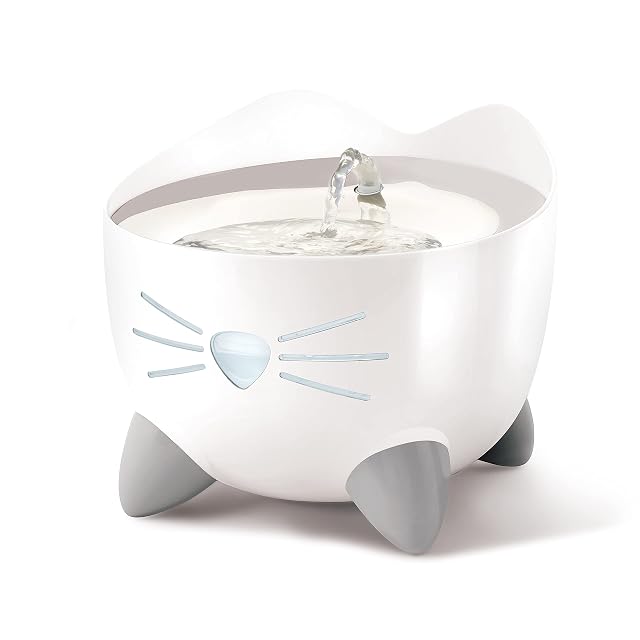
  1. Catit PIXI stainless steel

    2.5 L · stainless insert · three flow modes · lit level indicator

    A 2.5-liter fountain with a stainless drinking surface, three flow settings and a nose that lights red when the water is low. The pump hangs in the water rather than sitting under the bowl.

    Best for: A cat that has refused a fountain before — three flow settings are three chances rather than one.

    8.1/10

    ≈ $51

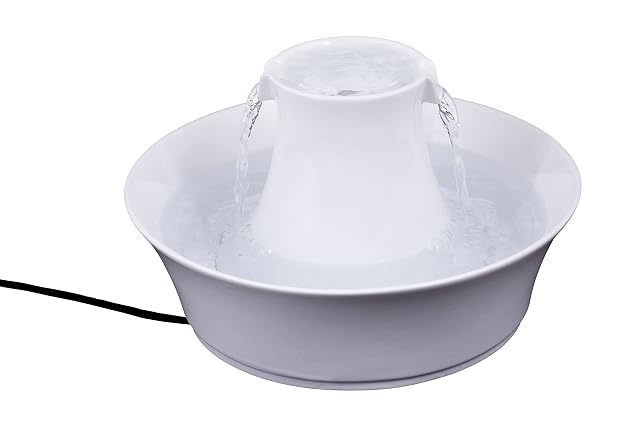
  2. PetSafe Drinkwell Avalon ceramic

    Ceramic · 2 L · filtered · submersible pump

    The 2-liter ceramic Drinkwell, with free-falling streams rather than a single spout and a submerged pump. It is the middle of PetSafe’s ceramic range in both size and price.

    Best for: A cat that drinks from taps: falling water is exactly what a running tap looks like at cat height.

    8.7/10

The questions owners ask

Will a fountain make my cat drink more?

Some cats drink more from moving water than from a still bowl — that is the honest version of the claim. What a cat should be drinking, and what it means if it is not, is a question for a vet rather than for a product page.

What do the filters cost per year?

On a cheap fountain, a substantial fraction of the purchase price. Price a year of them before comparing fountains — it changes which one is actually cheapest.

How often does it need cleaning?

Weekly at least, including taking the pump apart. Biofilm forms in the pump and channels within days and a rinse does not reach it.

Plastic, ceramic or stainless steel?

Ceramic and stainless steel are easier to keep genuinely clean and are less associated with chin irritation in cats. Plastic is lighter and cheaper.

Are the filters necessary?

They improve taste and catch hair and debris. Whether they are worth the recurring cost depends on your water and your cleaning routine.

My cat is scared of the pump noise. What now?

Try the quietest model you can, place it away from the feeding area, and keep a still bowl. Some animals simply prefer still water.

My pet has suddenly started drinking much more. Is that fine?

A marked change in drinking, up or down, is a reason to see a vet. A fountain supports intake; it does not explain why intake changed.

Where should I put the fountain?

Away from the food bowl and away from the litter tray, which many cats prefer. A quiet corner they already pass through works better than a busy one.

Each product, and the animal it was chosen for

Catit PIXI stainless steel · $51

For the animal that: A cat that has refused a fountain before — three flow settings are three chances rather than one.

Its main plus: Three flow modes: a fussy cat that ignores a jet will often drink from a gentle flow

Its main minus: Carbon filters are a Catit consumable and must be replaced regularly

Read the full review →

PetSafe Drinkwell Avalon ceramic

For the animal that: A cat that drinks from taps: falling water is exactly what a running tap looks like at cat height.

Its main plus: Falling streams aerate the water, which is what a fussy drinker often responds to

Its main minus: Filters are a PetSafe consumable

Read the full review →

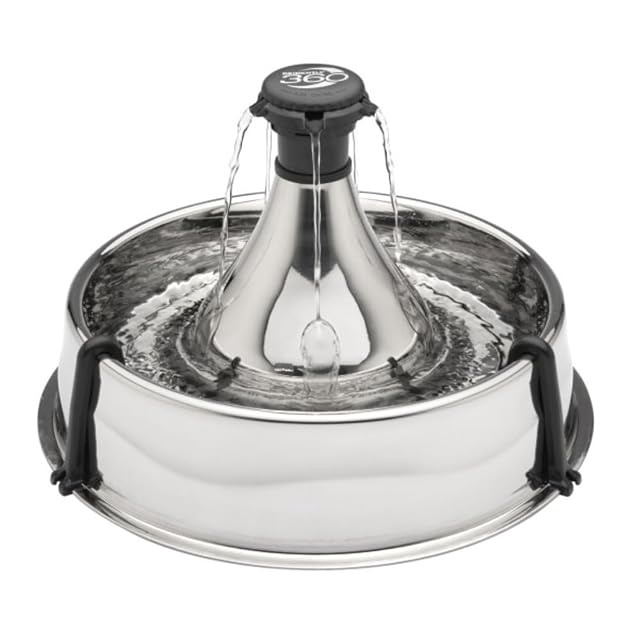
PetSafe Drinkwell 360 Multi-Pet

For the animal that: Two or more animals, or one cat and one dog sharing a water station.

Its main plus: 3.8 liters: the only fountain here that a multi-animal household will not be refilling constantly

Its main minus: The most expensive fountain in this group

Read the full review →

What else you will need

Refills, liners and spares from the same aisle, at the price we read. Confirm they suit the product you choose before ordering: it turns on the model and the part number, which the listing gives.

In a line

Comparisons that help you decide

Direct comparisons already published between two products from this guide or this aisle.

What this list is based on

The products above are drawn from the catalog of this site. Specifications are those the manufacturer and the Amazon listing publish; prices are what Keepa recorded on the date shown, and both move. The order uses declared specifications, stated strengths set against stated limits, and price. Nothing here has been given to an animal by us, and the page makes no such claim.

Last checked on

Prices quoted in these summaries are dated readings. The live price is shown next to each product.

The tool we use ourselves

Chosen your machine? Now buy it at the right price.

Litter boxes and grooming vacuums swing by a hundred dollars or more across the year, and the biggest "discounts" often land at prices the same model sold for six weeks earlier. UniverTrack tracks the real price history across retailers, spots fake reductions, and alerts you when it is genuinely the moment to buy.

Real price historyBuy-now alertsAI buying assistant
Try free for 14 days →
No commitment · Cancel in one click · 5 languages