Skip to content

The best first self-cleaning litter box

Every automatic litter box is a bet on the cat accepting it, and a refused box is the most expensive outcome in this category. These three are ordered on acceptance first, capacity second.

Acceptance beats specification

A cat that has always used an open tray sees an enclosed drum as a tunnel with a moving floor. Some accept it in a day; some never do. That is why the box we put first is open-topped and cheap enough that a refusal costs the price of a good manual setup rather than a week’s wages.

Then the numbers

Once acceptance is settled, the specifications that matter are the minimum detected weight, the delay before the cycle starts, and the waste capacity in days. All three are published by the makers here, and all three are in the reviews.

What not to buy first

A camera box. Per-cat identification is genuinely useful in a three-cat house and worthless in a one-cat house, and it doubles the price.

Which one suits your animal?

You have one cat
A self-cleaning box can work well, and the main question is whether the cat accepts it.
You have several cats
Advice is one box per cat plus one, and automation does not change that arithmetic.
Your cat is nervous of noise or movement
The mechanism is what they object to, and some cats never accept an automatic box.
You want to monitor health
Some boxes log visits and weight, which is genuinely useful and also the feature most likely to need a subscription.

Picking by the animal

Reducing daily scooping

The core promise, and it works, though the waste drawer still needs emptying and the box still needs deep cleaning.

Odor control

Removing waste promptly does more for odor than any filter. That is the real mechanism behind the claim.

Monitoring visits

Frequency of use is a health signal in cats, and boxes that log it turn litter into data.

Time away

It reduces how bad things get, but a cat still needs a person checking in daily.

The points that make the difference

Whether your cat will use it
The only criterion that matters absolutely. A box the cat refuses is a very expensive object, and there is a real transition period.
Entry height and size
Kittens, older cats and large cats all have specific needs. A high step or a tight enclosure is why some cats refuse.
The litter it requires
Most automatic boxes need clumping litter and reject others. That constrains your choice and your ongoing cost.
Safety sensors
The mechanism must stop if a cat enters. Sensor reliability is a real safety question, not a convenience feature.
Cleaning access
Automatic does not mean self-cleaning forever. A box that comes apart for a full wash is what stays hygienic.

Which figure for which animal

Your householdWhat to expectWhat does not change
One confident catMuch less scoopingDeep cleaning
Several catsStill one box per cat plus oneThe arithmetic
Nervous catMay refuse it entirelyKeep the old box
Away for a dayLess unpleasant on returnSomeone must still check

What owners get wrong

Removing the old box immediately
Cats need a transition. Keeping the familiar box alongside the new one, and moving it away gradually, is what prevents accidents elsewhere.
Using the wrong litter
Most automatic boxes require clumping litter to work. The wrong type jams the mechanism and defeats the whole purpose.
Assuming it never needs cleaning
Waste drawers fill, sensors get dirty and the whole unit needs periodic washing. Automation reduces work; it does not remove it.
Ignoring a change in litter box behavior
Straining, frequent visits or avoiding the box entirely are veterinary signs, particularly in male cats. That is urgent, not a training issue.

By the household and the animal

The single-cat household
A self-cleaning box, introduced alongside the old one, with clumping litter.
The multi-cat household
Enough boxes for the cats regardless of automation, and the automatic one as an addition rather than a replacement.
The health-monitoring owner
A box that logs visits and weight, accepting that this is often where a subscription sits.

Cleaning, refills and working life

An automatic box handles scooping and nothing else. Waste drawers fill, sensors get coated in dust, and litter dust works into the mechanism, which is where jams and false readings come from.

  • Empty the waste drawer on a routine rather than when it overflows.
  • Wipe the sensors; litter dust is what causes most misbehaviour.
  • Wash the whole unit periodically, which automation does not replace.
  • Top up litter to the marked level, since too little or too much both cause jams.

Safety

A moving mechanism in a space an animal enters is a genuine safety consideration.

  • Confirm the safety sensors work before relying on the box, and test them occasionally.
  • Supervise a kitten, an older cat or an unwell animal around an automatic box.
  • Keep the power cable out of reach of a chewing animal.
  • See a vet urgently about straining, frequent visits or blood, particularly in male cats.

Our picks, and what decided each

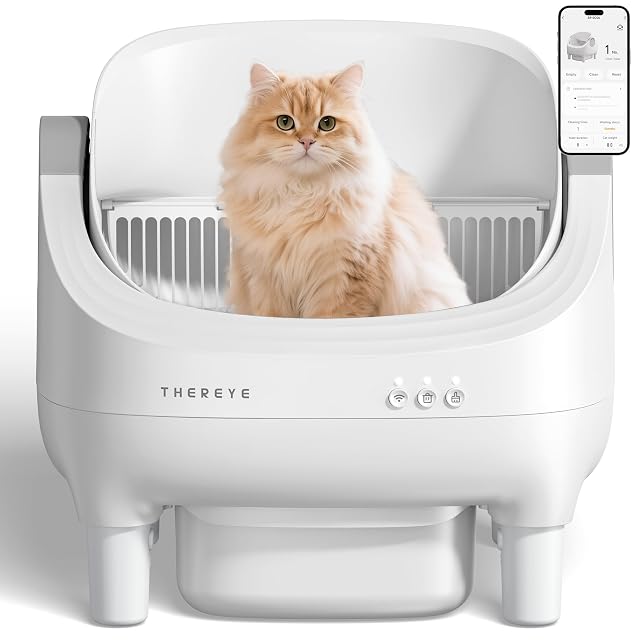
  1. Thereye ER-SC06 open XXL

    Open XXL · cats 1.5–12.5 kg (3.3 to 27.6 lb) · under 20 dB · 10 L waste

    The cheapest genuinely available box here, open-topped, with the lowest stated noise figure of the ten and a 1.5 to 12.5 kg (3.3 to 27.6 lb) range that covers almost any cat.

    Best for: A first automatic box: the price of a mid-range manual setup, an open shape cats accept, and no proprietary consumable.
    7.4/10

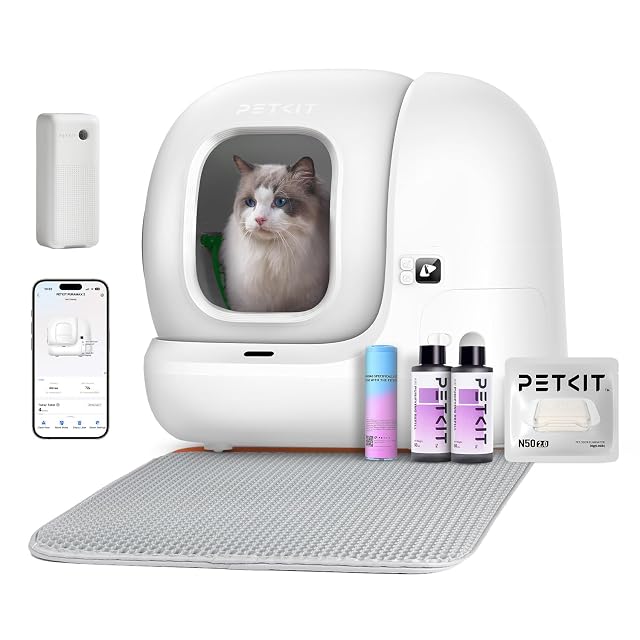
  2. PETKIT Pura Max 2

    76 L drum · 7 L waste · 20 cm (7.9 in) entry · cats 2–8 kg (4.4 to 17.6 lb)

    The best-documented box on this page: PETKIT publishes the drum volume, the internal dimensions, the entry height, the cat weight range and the age limit. It takes any clumping litter except crystal.

    Best for: A multi-cat household with adult cats between 2 and 8 kg (17.6 lb), a hard floor, and no intention of changing litter type.

    8.0/10

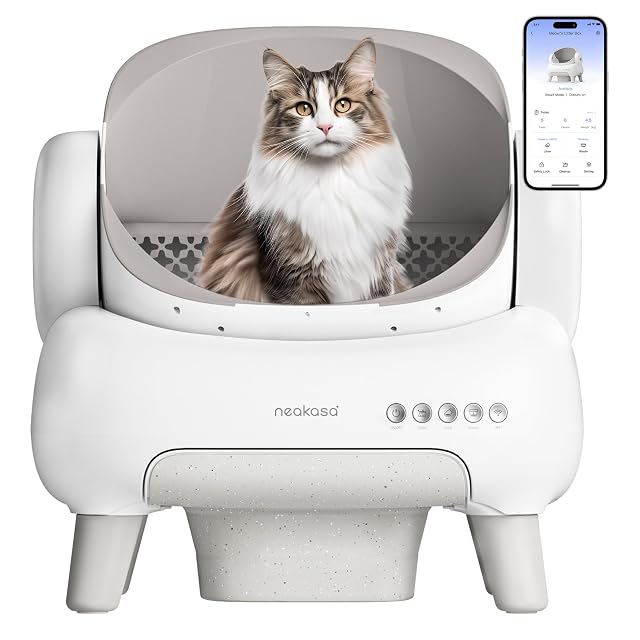
  3. Neakasa M1 Lite

    Open design · cats to 15 kg (33.1 lb) · 11 L waste · ≤50 dB

    An open-topped drum box for cats that refuse enclosed machines, with the widest stated weight range here — up to 15 kg (33.1 lb) — and 6 infrared plus 4 weight sensors watching the cycle.

    Best for: A large cat, or a nervous one that will not enter an enclosed machine — and a household that can put the box somewhere the litter scatter does not matter.

    8.6/10

The questions owners ask

What if my cat refuses it?

Keep the old tray beside it for two weeks and let the cat choose. Most refusals are about shape and noise rather than the machine itself, which is why the cheapest box here is open-topped and the quietest on published figures.

How much should a first one cost?

Between €150 and €250 buys a box with real safety sensing and two weeks of capacity. Below that, the sensor thresholds and the bin are what get cut.

Will my cat accept a self-cleaning box?

Many do, some never. Keep the old box available and move it away gradually rather than removing it on the day the new one arrives.

Do I still need one box per cat?

Yes. The usual advice of one box per cat plus one is about access and territory, and automation does not change that arithmetic.

What litter do they need?

Most require clumping litter, and the wrong type jams the mechanism. That constrains both your choice and your ongoing cost.

Are they safe?

Models have sensors that stop the mechanism when a cat is inside. Confirm they work, test occasionally, and supervise kittens and older cats.

Does it really stop the smell?

Removing waste promptly does more for odor than any filter, so it helps considerably. The waste drawer still needs emptying regularly.

Do these boxes need a subscription?

The hardware does not, but health-monitoring and app history features often do. Check which side of that line the features you want fall on.

Each product, and the animal it was chosen for

Thereye ER-SC06 open XXL

For the animal that: A first automatic box: the price of a mid-range manual setup, an open shape cats accept, and no proprietary consumable.

Its main plus: The lowest published noise figure on this page, by some margin

Its main minus: No crystal litter, and no plant litters beyond tofu in the stated list

Read the full review →

PETKIT Pura Max 2

For the animal that: A multi-cat household with adult cats between 2 and 8 kg (17.6 lb), a hard floor, and no intention of changing litter type.

Its main plus: Publishes the numbers that matter — entry height, internal diameter, weight range and age limit

Its main minus: Not for kittens: PETKIT excludes cats under 6 months and under 2 kg (4.4 lb) outright

Read the full review →

Neakasa M1 Lite

For the animal that: A large cat, or a nervous one that will not enter an enclosed machine — and a household that can put the box somewhere the litter scatter does not matter.

Its main plus: Open design: the least intimidating shape here for a cat moving off a manual tray

Its main minus: An open box does less to contain odor between cycles than a sealed drum

Read the full review →

What else you will need

Refills, liners and spares from the same aisle, at the price we read. Confirm they suit the product you choose before ordering: it turns on the model and the part number, which the listing gives.

In a line

Comparisons that help you decide

Direct comparisons already published between two products from this guide or this aisle.

What this list is based on

The products above are drawn from the catalog of this site. Specifications are those the manufacturer and the Amazon listing publish; prices are what Keepa recorded on the date shown, and both move. The order uses declared specifications, stated strengths set against stated limits, and price. Nothing here has been given to an animal by us, and the page makes no such claim.

Last checked on

Prices quoted in these summaries are dated readings. The live price is shown next to each product.

The tool we use ourselves

Chosen your machine? Now buy it at the right price.

Litter boxes and grooming vacuums swing by a hundred dollars or more across the year, and the biggest "discounts" often land at prices the same model sold for six weeks earlier. UniverTrack tracks the real price history across retailers, spots fake reductions, and alerts you when it is genuinely the moment to buy.

Real price historyBuy-now alertsAI buying assistant
Try free for 14 days →
No commitment · Cancel in one click · 5 languages